Woman about to cross a street using an umbrella and a mobile phone.
Tartu University & Nortal - Logos
White Paper
 

Formula for creating trust in digital government

This white paper explores practical and tech-driven strategies to help governments rebuild trust and improve service delivery.

Formula for creating trust in digital government

Authors: Andres Raieste (Senior Vice President – Public Sector (Global) Nortal), Janek Rozov (Deputy Director General Estonian Tax and Customs Board), Mihkel Solvak (Associate Professor in Technology Research General Manager of IT Impact Studies University of Tartu).

 Executive summary


Trust is the foundation of democracies - trust provides governments with legitimacy. From an economic standpoint, high trust leads to institutional effectiveness and progress. Policies that increase effectiveness typically also yield higher trust and vice versa.

Yet most governments struggle with trust. In the private sector, trust is self-regulating – if customers do not trust a company, that company eventually loses its customers. But democracies suffering from low trust mostly suffer from inhibited growth and political instability that leads to limited progress on technological adoption and social development.

This report highlights research into increasing trust, with a focus on technological approaches in the public sector that enable governments to increase effectiveness and trust.


Our key recommendations are:

  1. Adopt modern service delivery channels to deliver end-to-end outcomes over fractured user experience. Invest in secure building digital public infrastructure to enable a higher maturity level of services.

  2. Establish clear rules in data ownership, legitimate use of personal data by institutions, data protection and rules that make physical and digital transactions and services legally equal. Provide clear interpretation of rules.

  3. Create services that enable real-time transparency concerning the use of personal data. Adopt mechanisms such as targeted transparency to increase voluntary compliance.

  4. Ensure continuous small improvements in public service delivery over large reforms. Create procurement rules to enforce the mechanism. Utilize incentives and nudging strategies to shift users towards higher levels of voluntary compliance over time.


All these recommendations can be implemented in the federal, state, local government, or organization context. This report aims to provide a simple thinking model for civil servants at all levels that can be factored into policymaking, technical improvements, and practical delivery of public services.

 What is trust?


Definition of trust


Trust is our willingness to be exposed to another party’s actions on something that is important to us, without being able to control or monitor that other party. In other words, trust means relying on something beneficial getting done for us without being able to fully control it. Something becomes trustworthy when we can rely on it to perform consistently in that manner.


To understand trust, we must understand the human nature.

Few examples of presumptions and emotions that influence trust in governments.

Clock icon

"Always late"

Negativity bias – The train might be late sometimes, but feels like always

Hand + money icon

"The rich will always get away with it"

E.g., public scandals revealing tax avoidance

Head icon

"I believe what I can see for myself"

Human nature is to distrust things we cannot experience ourselves

Replace icon

"They take our jobs"

Human nature is to distrust what we don’t fully understand
 Trust and effectiveness

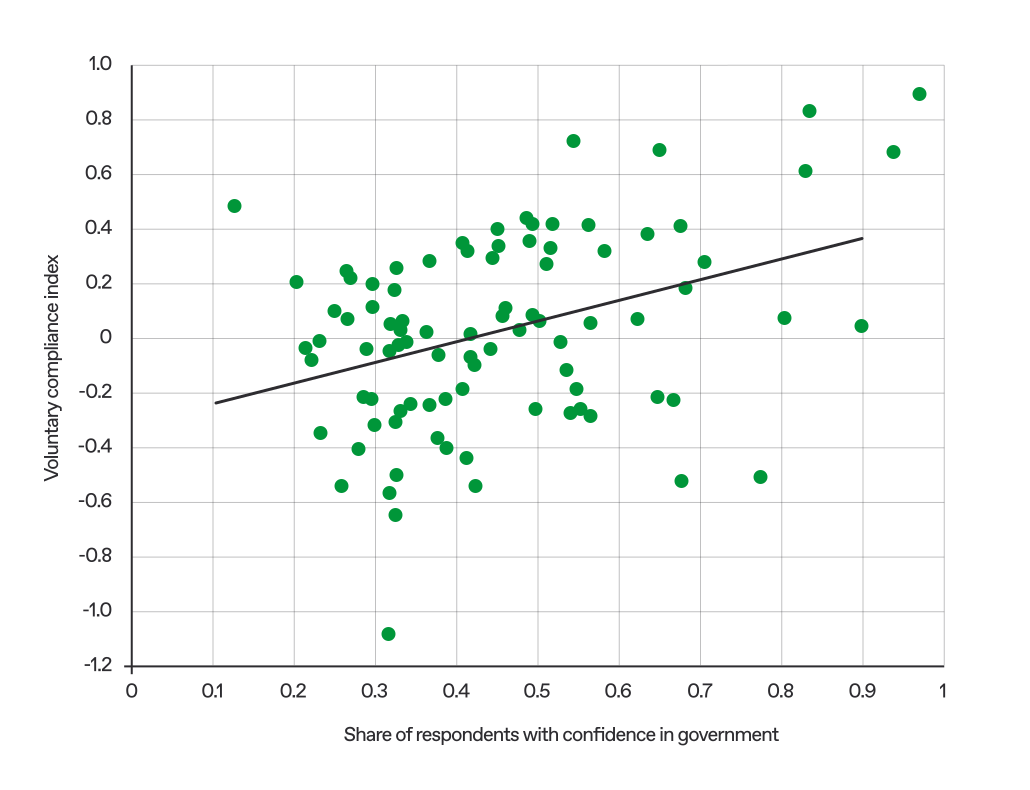
Research shows that high trust leads to policy effectiveness. The specific mechanism is voluntary compliance, which is especially valuable for government functions that would otherwise resort to enforcement by intrusion (see Figure 1).

Kenneth Arrow, the Nobel Prize winner in economics in 1972 and one of the great welfare economists of the 20th century, is often quoted when economists discuss trust. Arrow says that “virtually every commercial transaction has within itself an element of trust … it can be plausibly argued that much of the economic backwardness in the world can be explained by the lack of mutual confidence” (Arrow 1972). Empirical evidence for his claim is plentiful. High-trust communities are better off economically as trust enables more economic transactions while reducing the need for elaborate compliance and control mechanisms. This holds for global (e.g., Algan & Cahuc 2014) and withincountry comparisons (Guiso et al. 2004). In fact, the evidence is strong enough to warrant claims that overall “welfare returns to investing in trust could be substantial” (Hamilton et al. 2016). Hence, we can view trust as purely functional – it is an efficient enabler of social and economic transactions. It also follows that trust leads to efficiency and effectiveness gains when implementing policies or building services because citizens voluntarily change their behavior in ways that are more likely to bring about the desired policy outcome.

Graph showing trust and compliance, by country
Figure 1. Trust and compliance, by country. Source: Integrated Values Survey. https://www.economicsobservatory.com/does-public-trust-in-government-matter-for-effective-policy-making

 Different reasons for trust

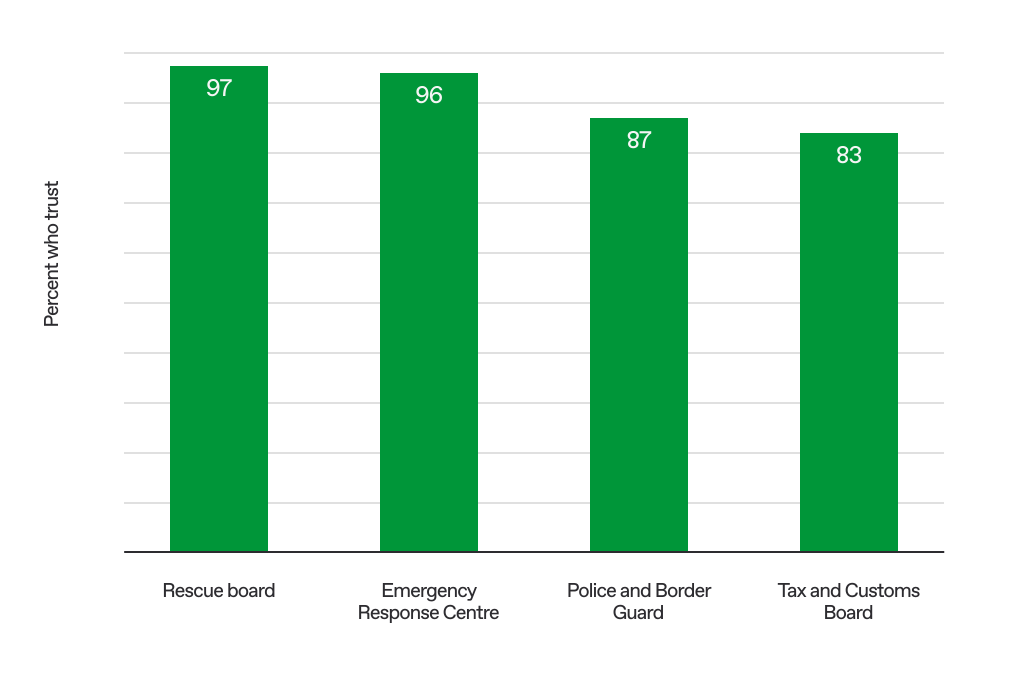
Whom would you rather trust? A firefighter, saving your life, or a tax inspector? The Rescue Board and the Tax and Customs Board are among Estonia’s highest trusted public services.

Graph showing trust of institutions
Figure 2. Trust of Institutions, 4th quarter 2023. Source: Turu-uuringute AS study commissioned by Ministry of Interior. https://www.siseministeerium.ee/ministeerium-ja-kontaktid/ministeerium-ja-minister/uuringud-ja-analuusid#avaliku-korra-tagami

In Estonia – citizens trust both, the firefighter and the tax inspector, for the same reason. Not because one rescues you from a burning building and the other takes your hard-earned tax dollars. But because they agree that they both do the right thing. The reasons for coming to this conclusion differ, however.

Value from service goal

The opinion on the fire rescue service is, in essence, a valence issue; there is a social consensus that coming to the rescue is the right thing to do. If you add the reliability of coming to the rescue you have the winning formula and trust emerges. It is a good thing that is being done reliably. It means one can trust the fire service because it is a good thing done right.

Value from mode of service delivery

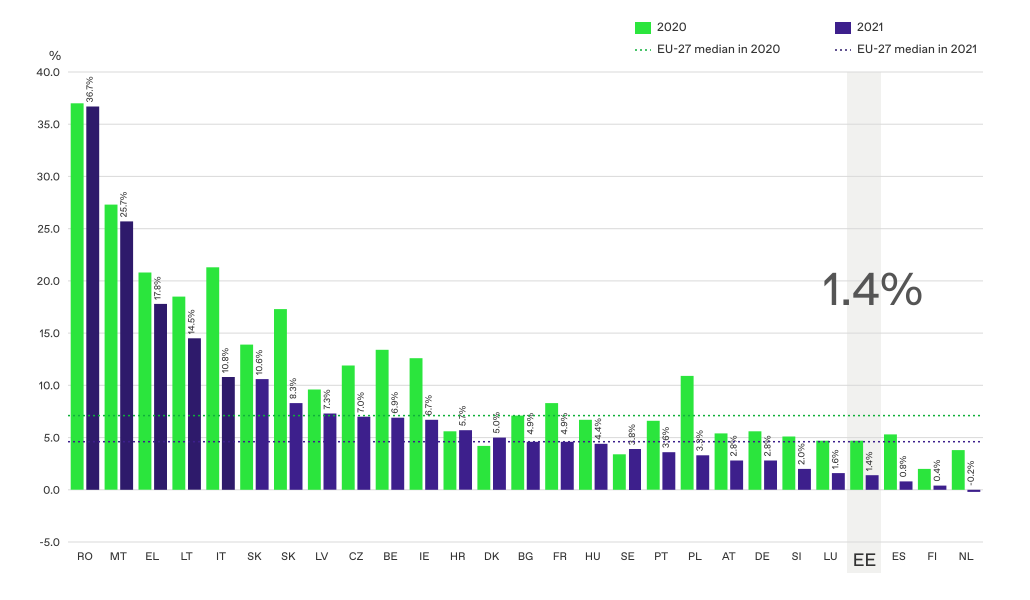
The more paradoxical example is with the tax administration. The Estonian Tax and Customs Board is one of the most trusted public institutions in Estonia, and at the same time has one of the highest collection efficiencies in the European Union (Figure 3). This dynamic well demonstrates the correlation between trust and effectiveness.

Graph showing VAT Compliance gap
Figure 3. VAT compliance gap by Member State (as % of VTTL, 2020 vs 2021). Source: European Commission, Directorate-General for Taxation and Customs Union, Poniatowski, G., Bonch-Osmolovskiy, M., Śmietanka, A. et al., VAT gap in the EU – 2023 report, Publications Office of the European Union, 2023. https://data.europa.eu/doi/10.2778/911698

Taxes are a position issue; we have different opinions on their necessity, or at the very least, there is no consensus that they are uniformly good. In fact, given the choice to pay taxes or not while keeping everything else constant, an overwhelming majority of us would choose not to pay taxes at all (Mascagni 2018). But a position issue can be turned into a valence issue by how a service is organized. One might disagree with taxes but agree that if tax is needed, it should be done as simply as possible. And equally, a person who thinks taxes are good and necessary to organize societal functioning will agree with an anti-tax advocate that paying taxes should be simple. The organizing principle will override the animosity of my anti-tax position. It means one trusts the tax service because they do an unpleasant thing right.

 Trust as both enabler and dependency

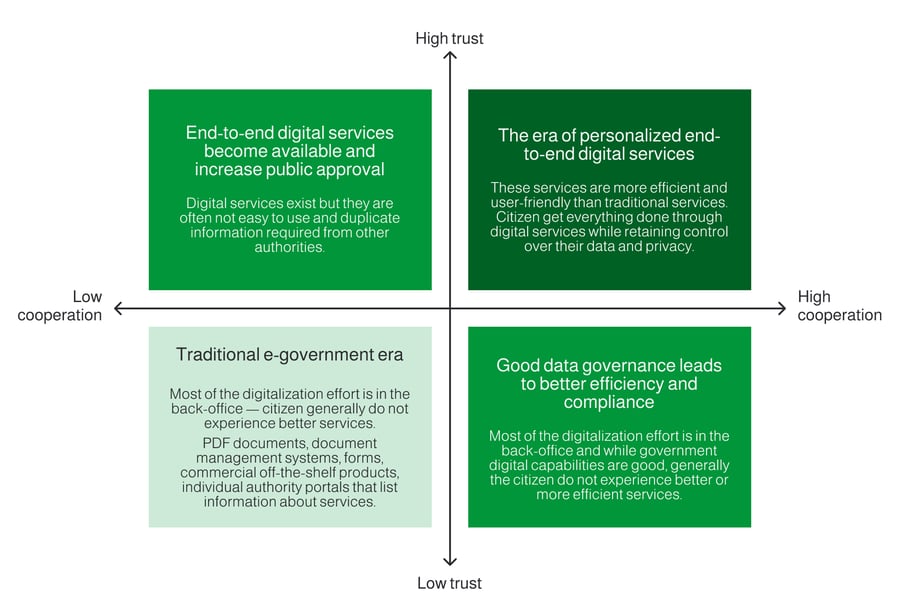
The paradox of digital transformation – trust is needed to invest public capital in digital transformation, and at the same time, digital transformation will result in trust. It is both an outcome of the process and a necessary precondition for it. But such a virtuous cycle, where the initial trust level enables a digital service uptake and the usage of the same services starts to increase, trust can only be kickstarted when the initial trust level is there. So, building trust to a level when the positive dynamic sets in is a very practical question. From a certain level of digital maturity onward – like moving from traditional e-government to personal government – trust becomes a core enabler of governance as citizen willingness to share their data is a technical necessity of the system.

Diagram showing post-digital era of equitable and sustainable public services
Figure 4. Source: Personal Government - a vision for a post-digital era of equitable and sustainable public services (2023). https://www.personalgovernment.com/personal-government-white-paper

In the following chapter we explore what are the means to create trust by analyzing the components of trust.

 Formula on trust


Trust has been researched at length. One would be hard-pressed to identify a domain of society where trust has not been explored. It is safe to say that collectively we know a great deal about trust. Be it on interpersonal and generalized trust (see Dinesen, Thisted & Bekkers 2017, Rotenberg 2020), trust and personal well-being (see Zhao 2024), trust and economic efficiency (Coyle & Lu 2020), trust in business relationships (Castaldo 2010), trust and digitalization of the public service (Lim & Thing 2024), trust in AI (Lukyanenko et al., 2022, Benk et al., 2024), trust in politics (Levi & Stoker 2000, Uslaner 2018), and governments (Chanley 2000), trust in organizations (Lane 1998), institutions (Berg et al 2020) and international institutions (Torgler 2008). Furthermore, all those empirical studies are built on an impressive array of theories on what is trust (Möllering 2001, Lane 2001), how it is built (Fadillah & Huiquan 2024), what are its primary reference objects and how asymmetric trust is (Venegas 2018), and of course, how trust should be researched (Hendriks et al., 2021).

All of these details have increased our knowledge of trust a lot, but they have also obscured some basic truths that those studies implicitly share. What emerges from all those extremely detailed and illuminating empirical and theoretical examinations of trust in different contexts is a certain thin red line they all agree on. And this fine line connects directly to the fundamental definition of trust we outlined earlier: trust occurs when we receive what we expect (reliability), accept that it is what we deserved (fairness), and can, at least theoretically, verify that it is so (transparency). When examining specific theoretical attributes of trust, especially the well-known asymmetry principle, we should also note that the manner in which all of this is delivered (execution) matters. The trust formula, therefore, is as follows:

Handshake icon white


Trust = reliability × fairness × transparency ± execution
The first three elements are necessary conditions, hence their multiplication. If one is zero, then growing the others won’t really help. Execution is also essential, and it can either increase or decrease trust, depending on its nature. The following sections will explain the elements of the formula in detail.


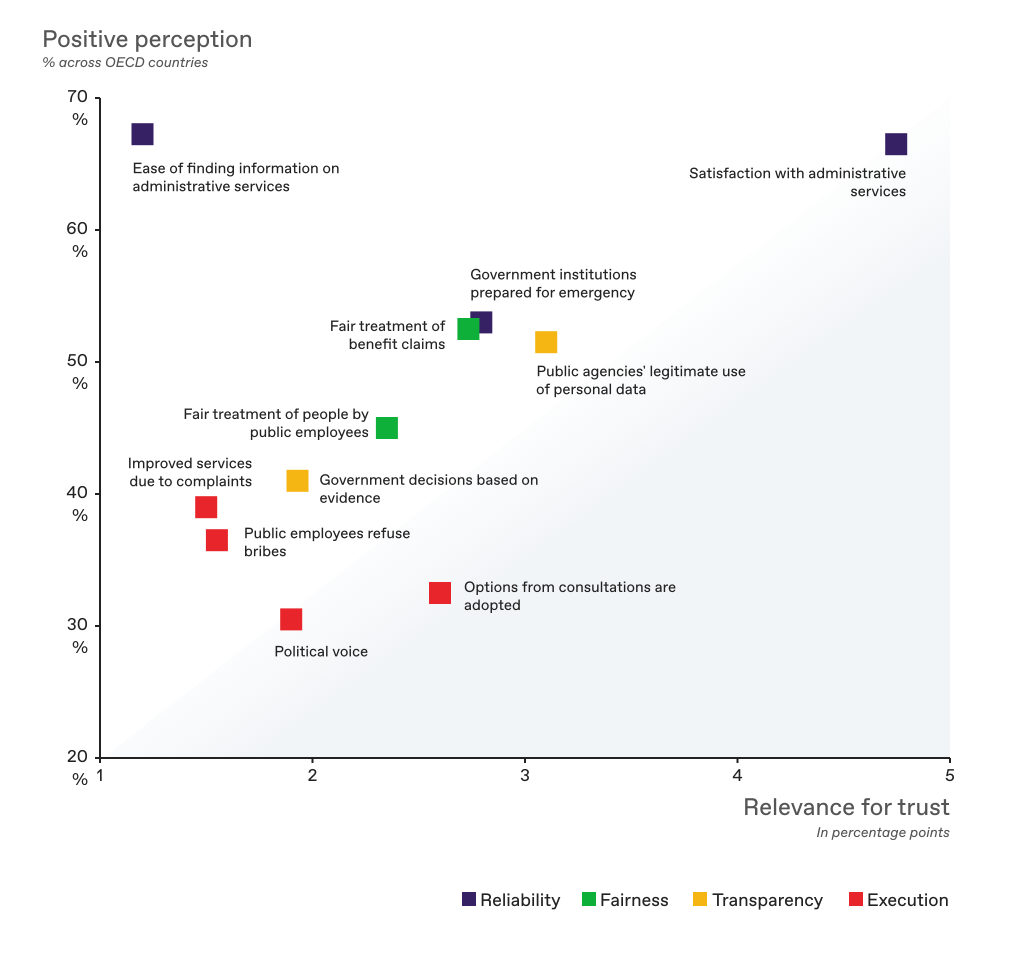
Reliability, fairness, and transparency in public services are shown to have the most substantial impact on trust, as highlighted in the following chart.

Graph showing relevance for trust
Figure 5. Components of trust formula mapped and plotted on OECD Trust Survey 2024. Satisfaction with services that provide outcomes has by far the most impact on trust and positive perception. Simply providing information online (fractured experience) does not significantly improve trust. Source: OECD Survey on Drivers of Trust in Public Institutions – 2024 Results https://www.oecd.org/en/publications/oecd-survey-on-drivers-of-trust-in-public-institutions-2024-results_9a20554b-en.html

 Reliability

Continuing with the earlier examples, we can summarize that one trusts the fire rescue service because it does a good thing and is reliable in doing so – the very definition of trust. One trusts the tax authority, and while they may impose an obligation, they do so in a way that is fast and easy and non-demanding of one’s time and resources.

Tax reporting, like any form of reporting and oversight, represents inefficiency because it becomes necessary only in the absence of trust. If an excellent taxing service were provided, we would trust it. In the case of fire rescue, the service goal is of inherent value for us and the means of delivering it is reliable – trust emerges. In the case of taxing, the service goal is not of intrinsic value to us, but it is done right and reliably – trust emerges. We hence have the first necessary element for trust: reliability of delivery. Something becomes trustworthy when we can rely on it to perform consistently in the desired manner.

The examples also show that reliability can come through the inherent value of the service goal to the client (like rescue) or through how the service is organized (like pre-filled tax reports, where the effort of reporting taxes is minimized or eliminated). In both cases, the outcome of the service will have to be delivered at a highly consistent rate every time.

The argument for mature digital services is commonly related to their reliability over traditional alternatives. Digital services, at their best maturity levels, offer outcomes in real-time, often proactively. If implemented right, they tend to significantly increase efficiency both for the citizens and the administration.

Statistically, the most impactful modifier for creating reliability for digital services is the user experience. Digital services can be accessed through cost-efficient devices that most people carry with them – such as mobile phones and other personal devices. The key difficulty, however, derives from establishing policies such as a once-only principle and implementing secure digital public infrastructure (especially digital registries, digital identity, and secure data exchange) to enable service delivery at higher maturity levels. Nations that have invested in those areas are consistently rewarded with high satisfaction and trust in public services in various international rankings, such as European e-Government Benchmark or United Nations e-Government Survey. Survey data on citizens further reiterates this. The OECD Trust Survey shows consistently over years and jurisdictions that service reliability, especially end-to-end delivery of outcomes, outperforms other factors that increase trust. It may seem unconventional; however, the data indicates that citizens prioritize service reliability far more than their participation in the delivery process or service design phase. This helps of course as well, but participation and consultations do not scale effectively and are significantly outperformed by the value seen in high service reliability.

Key recommendations:

    1. Prioritize services that deliver end-to-end outcomes instead of fractured experience. Fractured experience implies that the user needs to, for example, call a helpdesk or wait until a civil servant processes the application manually.
    2. Adopt modern service delivery channels. Invest in modern, accessible, and affordable service delivery channels. Switch to mobile channels as a policy in digital service delivery.
    3. Build digital public infrastructure. Invest in digital public infrastructure (especially digital registries, digital identity, and secure data exchange) to enable high-maturity digital public service delivery.
reliability_img2

 Transparency

Trust, by definition, is needed when control isn’t possible. If complete control were achievable, trust wouldn’t be necessary. However, relying solely on trust can leave us in a vulnerable position. When control is limited, we need accountability mechanisms if trust breaks down or is misplaced. One of the most effective mechanisms is transparency. After all, a “black box” is only as reliable as it is transparent.

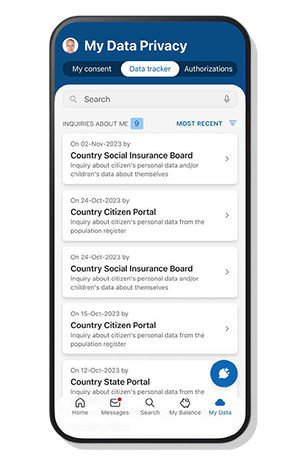
When we want control, we should have the option to exercise it. While 99% of people who trust may not want to or have the time to monitor every detail – that’s why they trust in the first place – the vocal 1% who do take the time perform an important role in ensuring accountability. This is why the option to control should exist, with transparency built into the service infrastructure to support it. In Estonia, all citizens can see in real-time who has accessed their data using a public digital service called the Data Tracker. Built on top of the national data exchange system as part of the public digital infrastructure, this service provides citizens with both assurance and the means to hold public service providers accountable for the legitimate use of their data.

Targeted transparency is another, more promising method, where specific disclosures are used to achieve objectives (Weil et al., 2013). For instance, publishing information on tax debts or taxes paid has been shown to positively influence voluntary compliance.

Other ways to enhance transparency include publishing open data and allowing citizens to generate insights and draw their own conclusions. For this to be impactful, open data services must ensure that information is easily accessible and machine-readable. This method not only increases transparency but also enhances data quality by expanding the number of consumers of the data. The problem is that such services, like providing open data in repositories, are often not useful for the regular 99% of citizens who lack the skill to process raw data, and in worst cases, they become simple dead data dumps. It is much more preferable to have automated transparency reports generated every time someone requests data on a citizen from a database or when service exchange personal data, like is done by the Data Tracker application in Estonia. This makes transparency effectively possible and gives a simple tool to exercise the right to one’s own data.

Key recommendations:

  1. Regulate data ownership. Clarify who owns what data and outline citizens’ rights and public sector rights regarding the use of that data.
  2. Create real-time transparency in personal data usage. We recommend creating a system that cannot be circumvented and gives citizens transparency regarding which authorities access their personal data and when. Although this service can be developed independently by any authority offering digital public services, it would be more effective to centralize this function and provide it as part of a national digital public infrastructure in the long run.
  3. Assure public access to data. Make it easy to access data in registries. Make information available with specific targeted intent to increase voluntary compliance.
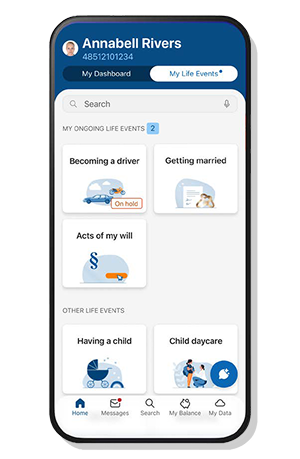
Mobile phone displaying app demo

 Fairness

Fairness ranks systematically medium-high in surveys as a key driver for trust. If a service delivery breaks the citizens’ sense of justice or fairness, people tend to find ways to avoid it, reducing adoption and voluntary compliance.

Discrimination has often been surveyed as a major source of distrust in institutions globally. A study on requests for information about unemployment benefits found that ethnic minorities received significantly lower-quality information (Hemker & Rink 2017). Another study found that minorities often encounter greater challenges when seeking information on voter registration (White et al., 2015). And research indicates that ethnic minority clients at unemployment agencies are penalized more frequently for policy violations compared to ethnic majority clients (Pedersen et al., 2018).

Discrimination is a human intent and action. Inconsistency in decision-making and following self-imposed or administrative rules is also very human. Though law prohibits discrimination, the very people implementing the law tend to be inconsistent in following it (Kahneman et al., 2016). Algorithms, however, do not discriminate unless made to do so. They are also highly consistent when used on good quality data. We argue that in digital service delivery and transparency of the decisionmaking, algorithms and rules reduce discrimination by reducing room for individual inconsistency. With proper technically enforced transparency and accountability rules algorithms do a fairer job.

Key recommendations:

  1. Identify discrimination and levels of unfairness in public service delivery and prioritize digitalization and transparency in algorithms accordingly.
  2. Create clarity in rules and regulations. Rules are more efficient when they are clear and do not require debate (thus inducing costs) in interpretation. We recommend clearly communicating the rules, algorithms, and principles related to digital public service delivery.
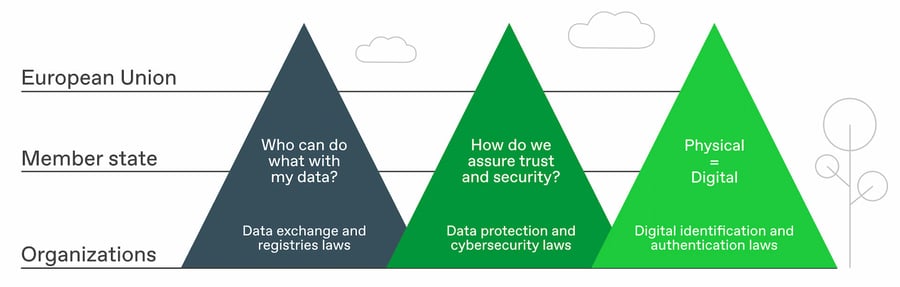
Graph showing key areas to regulate in digital governance and service delivery across various levels of state governance.
Figure 6. A simplification of key areas to regulate and clearly communicate in digital governance and service delivery across various levels of state governance.

 Execution

How we implement and execute public service delivery contributes to overall trust. We view execution not as a multiplier of trust but as an additive factor. While poor implementation may not completely erase trust, it can significantly lower it or enhance it.

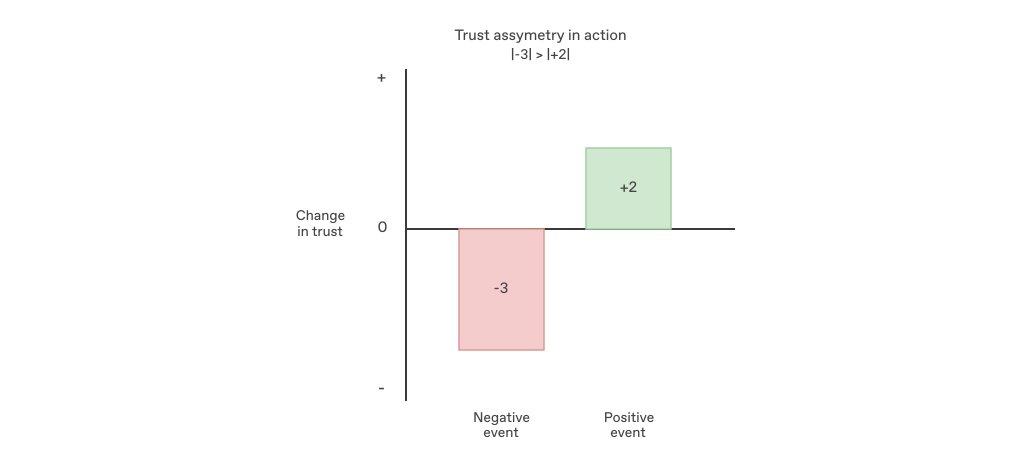
Recent research in risk perception has reported a “negativity bias” for risk-related information (White et al., 2003). Specifically, “negative” messages that indicate the presence of risk are believed to be more trusted and have a greater impact on risk perceptions than “positive” messages that suggest the absence of risk. This implies that trust is asymmetrical – it is easier to destroy than to create. Additionally, smaller positive events tend to have a more significant effect on overall trust than fewer larger events.

Diagram showing trust asymmetry in action
Figure 7. Trust asymmetry in action

In practice, larger reforms have a less positive impact on trust than continuous smaller improvements. This suggests citizens value consistent small improvements more than infrequent but significant reforms.

In Estonia, most public procurement related to developing digital public services and infrastructure is structured by funding policies that require projects to be broken down into smaller, more manageable projects with observable outcomes. Large digital services and infrastructure programs are executed under frame agreements with competing vendors and divided into manageable chunks (typically around 500,000 EUR). This approach has led to better risk management and resulted in significantly faster observable progress at a lower cost.

Creating trust is a constant and gradual process. Not all services can be transformed into high-trust equivalents solely through technical means. Creating trust takes time, and strategies that foster trust have proven effective. Service delivery should include ways to nudge users toward higher levels of trust. For example, while a digital tax filing service with a pre-filing option might be available, it requires users to trust the tax authority with their data. A nudging strategy could involve transitioning users from a basic service to a more advanced one through voluntary means, such as offering incentives like faster processing times in exchange for sharing personal data.

Key recommendations:

  1. Establish rules to effectively manage risks and ensure continuous observable outcomes from large programs.
  2. Incorporate specific incentives and nudging strategies that are tailored to the relevant authorities into service delivery.

Breakfast every day is more important than a large birthday gift once a year.

 Examples of services


In the following, we show examples of services where trust and voluntary compliance have been key considerations.

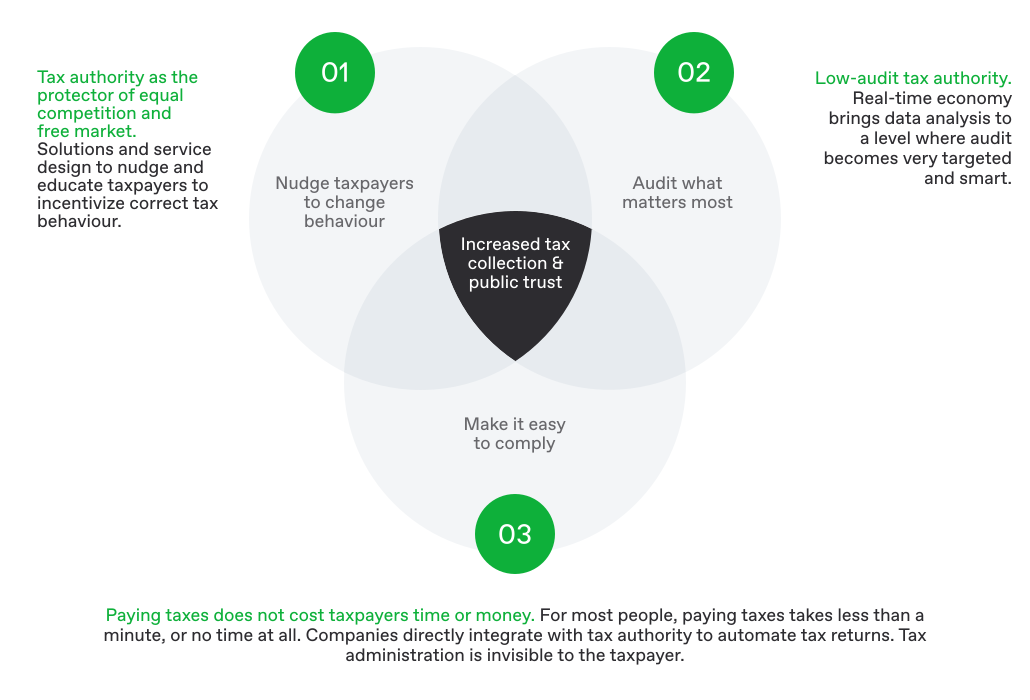
The Estonian Tax and Customs Board has redefined its role by focusing on creating user-friendly services for citizens who want to comply rather than solely pursuing enforcement. This shift from “catching the bad guys” to empowering the compliant has transformed the taxpayer experience. By automating processes and reducing tax filing to a single click, the Board has significantly cut the effort required for compliance. The strategy also emphasizes education and clarity – ensuring that citizens understand how the tax system operates and why it matters, further contributing to voluntary compliance.

Venn diagram showing tax collection & public trust
Figure 8. Service delivery strategy for a tax administration. The combined strategy to increase trust and effectiveness (increased tax collection) manifests in specific incentives and strategies relevant to the authority’s problem areas.
Example 1

Taxes are pre-calculated, and payment is made very easy for the citizen if the citizen consents to sharing data.

Pre-filling tax returns has been a successful strategy in decreasing cost of compliance and increasing service reliability.

The purpose of this service design is to increase voluntary compliance by increasing service reliability for the citizen through incentives that eventually nudge the citizen toward higher levels of trust.

Mobile phone displaying app demo
Example 2

Showcasing citizen contribution to the state and society; and the state’s contribution to the citizen.

Taxpayers will understand how their taxes are utilized (“what I pay for”) and how the state finances are redistributed to benefit the citizen.

This service design aims to educate the citizen and increase voluntary compliance through targeted transparency.

Mobile phone displaying app demo
Example 3

The tax administration uses the data collected from the taxpayer to reflect to the taxpayers what their risk is and how they compare to the rest of the industry.

This service utilizes the concept of targeted transparency to increase voluntary compliance. With high score, audits would generally not be needed, optimizing the resources of both the tax administration and the taxpayer.

Additionally, the service provides the taxpayers with additional value from insights related to their industry in return for compliance, further nudging the taxpayer toward higher voluntary compliance

Mobile phone displaying app demo

 Bibliography


  1. Algan, Y., & Cahuc, P. (2014). Trust, growth, and well-being: New evidence and policy implications. In P. Aghion & S. N. Durlauf (Eds.), Handbook of Economic Growth (Vol. 2, pp. 49–120). Elsevier. https://doi.org/10.1016/B978-0-444-53538-2.00002-2
  2. Arrow, K. J. (1972). Gifts and exchanges. Philosophy & Public Affairs, 1(4), 343–362.
  3. Benk, M., Kerstan, S., & von Wangenheim, F. et al. (2024). Twenty-four years of empirical research on trust in AI: A bibliometric review of trends, overlooked issues, and future directions. AI & Society. https://doi.org/10.1007/s00146-024-02059-y
  4. Berg, M., & Johansson, T. (2020). Building institutional trust through service experiences—Private versus public provision matter. Journal of Public Administration Research and Theory, 30(2), 290–306. https://doi.org/10.1093/jopart/muz029
  5. Castaldo, S., Premazzi, K., & Zerbini, F. (2010). The meaning(s) of trust: A content analysis on the diverse conceptualizations of trust in scholarly research on business relationships. Journal of Business Ethics, 96, 657–668.
  6. Chanley, V. A., Rudolph, T. J., & Rahn, W. M. (2000). The origins and consequences of public trust in government: A time series analysis. Public Opinion Quarterly, 64(3), 239–256. https://doi.org/10.1086/317987
  7. Coyle, D., & Lu, S. (2020). Trust and productivity growth - An empirical analysis. Bennett Institute Working Paper.
  8. Dinesen, P. T., & Bekkers, R. (2017). The foundations of individuals' generalized social trust: A review. In P. A. M. Van Lange, B. Rockenbach, & T. Yamagishi (Eds.), Trust in Social Dilemmas. Series in Human Cooperation. Oxford Academic. https://doi.org/10.1093/oso/9780190630782.003.0005
  9. Fadillah, D., & Huiquan, Z. (2024). Developing public relations as a foundation for public trust: A systematic literature review and bibliometric analysis. SN Social Science, 4, 59. https://doi.org/10.1007/s43545-023-00813-5
  10. Guiso, L., Sapienza, P., & Zingales, L. (2004). The role of social capital in financial development. American Economic Review, 94(3), 526–556.
  11. Hamilton, K., Helliwell, J. F., & Woolcock, M. (2016). Social capital, trust and well-being in the evaluation of wealth (NBER Working Paper No. 22556). National Bureau of Economic Research.
  12. Hendriks, F., Distel, B., Engelke, K. M., Westmattelmann, D., & Wintterlin, F. (2021). Methodological and practical challenges of interdisciplinary trust research. In B. Blöbaum (Ed.), Trust and Communication. Springer, Cham. https://doi.org/10.1007/978-3-030-72945-5_2
  13. Hemker, J., & Rink, A. (2017). Multiple dimensions of bureaucratic discrimination: Evidence from German welfare offices. American Journal of Political Science, Volume 61, Issue 4, 786-803.
  14. Kahneman, D., Rosenfield, A. M., Gandhi, L., & Blaser, T. (n.d.). Noise: How to overcome the high, hidden cost of inconsistent decision making. Algorithmic judgment is more efficient than the human variety. Harward Business Review 2016. https://hbr.org/2016/10/noise
  15. Lane, C. (2001). Introduction: Theories and issues in the study of trust. In C. Lane & R. Bachmann (Eds.), Trust Within and Between Organizations: Conceptual Issues and Empirical Applications. Oxford University Press.
  16. Lane, C., & Bachmann, R. (Eds.). (1998). Trust Within and Between Organizations: Conceptual Issues and Empirical Applications. Oxford Academic. https://doi.org/10.1093/oso/9780198293187.001.0001
  17. Levi, M., & Stoker, L. (2000). Political trust and trustworthiness. Annual Review of Political Science, 3(1), 475–507. https://doi.org/10.1146/annurev.polisci.3.1.475
  18. Lim, J. W. Z., & Thing, V. L. L. (2024). Building confidence in a world of eroding trust. Digital Government: Research and Practice, 5(2), Article 16, 1–17. https://doi.org/10.1145/3653075
  19. Lukyanenko, R., Maass, W., & Storey, V. C. (2022). Trust in artificial intelligence: From a foundational trust framework to emerging research opportunities. Electronic Markets, 32, 1993–2020. https://doi.org/10.1007/s12525-022-00605-4
  20. Mascagni, G. (2018). From the lab to the field: A review of tax experiments. Journal of Economic Surveys, 32(2), 273–301. https://doi.org/10.1111/joes.12201
  21. Möllering, G. (2001). The nature of trust: From Georg Simmel to a theory of expectation, interpretation, and suspension. Sociology, 35(2), 403–420.
  22. Pedersen, M. J., Stritch, J. M., & Thuesen, F. (2018). Punishment on the frontlines of public service delivery: Client ethnicity and caseworker sanctioning decisions in a Scandinavian welfare state. Journal of Public Administration Research and Theory, 28(3), 339-354. https://doi.org/10.1093/jopart/muy018
  23. Rotenberg, K. J. (2020). The psychology of interpersonal trust: Theory and research (1st ed.). Routledge/Taylor & Francis Group.
  24. Torgler, B. (2008). Trust in international organizations: An empirical investigation focusing on the United Nations. Review of International Organizations, 3, 65–93. https://doi.org/10.1007/s11558-007-9022-1
  25. Uslaner, E. M. (2018). The study of trust. In E. M. Uslaner (Ed.), The Oxford Handbook of Social and Political Trust. Oxford University Press.
  26. White, M. P., Pahl, S., Buehner, M., & Haye, A. (2003). Trust in risky messages: The role of prior attitudes. Risk Analysis, 23(4), 717-726.
  27. White, A. R., Nathan, N. L., & Faller, J. K. (2015). What do I need to vote? Bureaucratic discretion and discrimination by local election officials. American Political Science Review, 109(1), 129-142. https://doi.org/10.1017/S0003055414000562
  28. Venegas, P. (2018). Trust asymmetry. In A. Morales, C. Gershenson, D. Braha, A. Minai, & Y. Bar-Yam (Eds.), Unifying Themes in Complex Systems IX. ICCS 2018. Springer Proceedings in Complexity. Springer, Cham. https://doi.org/10.1007/978-3-319-96661-8_48
  29. Zhao, M., Li, Y., & Lin, J. et al. (2024). The relationship between trust and well-being: A meta-analysis. Journal of Happiness Studies, 25, 56. https://doi.org/10.1007/s10902-024-00737-8
  30. Weil, David, Mary Graham, and Archon Fung. "Targeting Transparency." Science 6139 (June 2013): 1410-1411. https://www.hks.harvard.edu/publications/targeting-transparency

Get in touch

Learn more about how to build a human-centered government, provide a better public service experience and efficient public administration.