Reichstag dome
Reichstag dome
Reichstag dome
Reichstag dome
Reichstag dome
Tartu University & Nortal - Logos
White Paper
 

The next generation of digital government is proactive.

Instead of requiring people to apply for services, governments can deliver them automatically when they are needed.

Proactive Public Services

Authors: Dr. Keegan McBride (Departmental Research Lecturer in AI, Government, and Policy, Oxford Internet Institute(University of Oxford)), Prof. Dr. Gerhard Hammerschmid (Professor of Public and Financial Management, Director, Centre for Digital Governance Hertie School), Hendrik Lume (Principal Consultant - Public Sector), Andres Raieste (Senior Vice President – Public Sector (Global) Nortal),

 Executive summary


Following the first wave of public sector digitization that focused on making services accessible online, governments are seeking to increasingly automate public services,1 so that they require as little interaction from users and service providers as possible. Proactive public services (PPS)2 represent the pinnacle of this new wave of digital public services. In their most sophisticated form, these digital public services can be designed entirely without user interaction , offering unparalleled frictionless access to public services.

With minimal user interaction required, PPS are at the cutting-edge of service design by being as user-friendly as possible. Yet, their potential to increase the effectiveness of policies underlying public services is even more remarkable. Redesigning public services into PPS extends their reach by making it unnecessary for potential users to even be aware of them or must apply for them. This may especially benefit the most socially disadvantaged groups in society, who often already have the hardest journey for obtaining government services. Wide-scale introduction of PPS may therefore even contribute to a more socially just and equitable society.

At the same time, PPS can help push the boundaries of automation in the delivery of public services as governments face mounting pressure to harness digitization to improve service delivery efficiency. PPS can help governments fulfill citizens' increasing expectations that digital public services be provided with the same user friendliness as private sector digital services. It also has the potential to reduce costs and required personnel, freeing up public funds to tackle the most pressing challenges of our time, such as climate change, and mitigating the impact of increasing labor shortages in the public sector, which confront many developed countries.

PPS are part of a wider transformation towards proactive government that delivers users public services without waiting for formal requests. It implies a capacity to anticipate societal and economic developments, as well as users’ needs, by capturing real-time information and applying it to re-design services.

Some of the most digitally advanced nations in the world have begun the path towards proactive government by successfully implementing the first PPS. However, even the most digitally advanced nations have only been able to implement a small number of PPS to date. Their experience shows that building these services is significantly more complex than other types of digital public services. Creating sophisticated PPS requires a strong foundation of environmental, technical, and organizational building blocks.

This includes a supportive regulatory environment that enables the inter-agency exchange of personal data, a requirement to implement many advanced PPS. A high level of trust in the public sector is also essential to create a desire to experiment with and transition to this mode of digital public services and ensure continuous support for it.

A solid technical foundation greatly helps facilitate PPS’ implementation. Four technical building blocks are particularly relevant:

01

A functioning digital identity ecosystem to allow users to securely access PPS that require interaction.

02

Accurate, up-to-date data to provide the service reliably and efficiently to as many eligible users as possible.

03

The ability to exchange personal data securely and efficiently within all areas of a public administration, and ideally the health and private sectors.

04

Secure and legally binding electronic messaging between the public sector, citizens, and businesses.

The complexity of implementing PPS at scale is nothing short of a stress test for public administrations’ organizational capabilities. Re-designing digital public services from a reactive to a proactive approach demands an indepth understanding of the processes and organizations involved, as well as the ability and mindset to completely re-think them. Implementing PPS will often drastically increase the complexity of stakeholder management as it often requires cooperation between several government agencies.

These foundational factors combined with the individual characteristics of each public service determine whether a public service can be re-designed as a PPS, and how far its delivery can be automated. To start implementing PPS, public administrations must understand its possibilities and evaluate the potential for each public service.3 This paper’s accompanying materials offer guidance on how to evaluate public services’ potential to be delivered as a PPS. A set of guiding questions is published to help interested public service providers evaluate individual public services regarding their suitability to be delivered proactively.

Transforming into a proactive government requires comprehensive preparation, as described in more detail in our recommendations. Due to this transformation’s wide-ranging implications, it will require politicians, civil service leaders and the public’s continuous support. Thus, a first step must be to raise awareness of proactive government’s potential, as well as realistic expectations of the time and effort needed for this transformation.

Governments must focus on building the necessary foundation and capabilities to efficiently implement PPS at scale. Experimenting and implementing less sophisticated types of PPS, such as proactive information, may be useful to gain experience and raise awareness, even for governments that lack the right foundation. However, a full-scale transformation to proactive government is unlikely to succeed without a solid foundation of technical building blocks and the right public administration capabilities.

 Introduction


Proactive public services (PPS) are an important step in the digital transformation of the public sector. This represents a clear paradigm shift, where proactivity – rather than reactivity – is the default setting. As the amount of data held by the public sector grows, it is possible to determine automatically and proactively who is eligible for which services. Why should beneficiaries still have to apply? Becoming more proactive will enable the public sector to be more effective and efficient, and improve the availability of services for all, especially the most disadvantaged.

Though the idea of creating a proactive public sector is simple, building PPS is not. Many governments around the world have begun to experiment with increasing proactivity, but there are still relatively few working examples.4

Building PPS has proven to be highly complex, requires substantial investment, changes in the predominating mental models, and continued political support. Building PPS is made increasingly difficult as most governments still lack the necessary legal, technical, and organizational prerequisites.

Despite these challenges, PPS do offer significant benefits to both service users and providers. Not only do they tend to improve efficiency in the provision of services, but they also have the potential to increase the effectiveness of the underlying policies by expanding services’ reach. They are a logical evolutionary step for any public agency seeking to provide their users cuttingedge digital services.

Therefore, providing PPS must become a question of “how” and “when” – not “if”. This will require public sector organizations to develop new capabilities and understandings on how services should be designed proactively. Without this, they will face many challenges – some of which may be insurmountable.

This white paper aims to help those who wish to understand, and potentially develop, PPS. It begins by defining and categorizing PPS and exploring their benefits. It continues by showcasing examples from Austria, Estonia, and New Zealand, where PPS of differing levels of sophistication have been developed, implemented, and trialed for several years. Drawing on these cases, the paper presents new insights and lessons learned, identifies the core building blocks for developing PPS, and concludes by offering recommendations on how to successfully transition to a more proactive public sector.

 Defining Proactive Public Services


In essence, PPS are digital public services that are being proactively provided to users whose eligibility has been predetermined by the service provider. The concept of PPS is not new. It emerged within broader debates around government service digitalization in the 2010s.5 Over the past few years, several definitions of what constitutes such services have emerged in academia.6

PPS are closely associated with, but not the same as, other concepts such as life event-based services7 and “applicationless” services8. Proactive public services differ from these concepts in that they are proactive, triggered by events, and range from proactive information to transactions.

Icon lightbulb

01. Are proactive, rather than reactive

The main characteristic of these services is that they are provided proactively by the public administration, based on an assessment of potential users’ eligibility for specific government services or benefits, rather than initiated by the user.

Icon calendar

02. Are triggered by events

PPS must be based on a trigger that initiates the service. Often, these are life events that the state is involved in, such as a birth or marriage.

Icon cog 2

03. Range from proactive information to proactive transactions

As described in more detail below, PPS can take different forms, ranging from proactively providing information to entirely proactive transactions without user interaction.

PPS differ substantially by the level of user-interaction required and, more generally, their level of automation. 9 We identify three broad types of PPS along this continuum:

Information Icon
Vertical dashed line
Proactive Information

Information about a public service a person is eligible for.

Based on an individualized evaluation of eligibility.

Users still need to apply for the service, hence this type of PPS is not application-less.

Transaction Icon 1
Vertical dashed line
Proactive Transaction
with user interaction

Application-less digital public service.

Offer to receive a public service is made based on individualized evaluation of eligibility.

Service can only be provided after users give information, consent or make decisions.

Transaction Icon 2
Vertical dashed line
Proactive transaction
without user interaction

Application-less digital public service.

Users receive public service based on individualized evaluation of eligibility.

Service is provided without user input. Users are only informed about the result.
  1. Proactive information

    Proactive public services with the highest degree of user interaction are digital services that merely inform users they are eligible for a public service. Users still need to apply to the service – hence, this type of PPS is not “applicationless”. However, they are based on a trigger and an individualized evaluation of eligibility. For example, citizens can be proactively informed that their driver’s license is about to expire, but still need to apply for a new license.

  2. Proactive transaction with user interaction

    In the middle of the continuum are services that do not require an application, but still need some degree of user interaction. For many public services, interactions are unavoidable when user consent is required, users need to add information that cannot be otherwise obtained by the state, or users need to make decisions the state cannot make for them.

    For this type of service, eligibility is established after a trigger, and the service or benefit is proactively offered to users based on their personal data. Users can review the offer and accept, amend, or decline it. An example is the provision of social benefits to families when a child is born in Estonia. Parents need to at least decide when to go on parental leave (See 4.2).

  3. Proactive transaction without user interaction

    In its most automated form, proactive transactions require no user interaction whatsoever. These transactions are provided automatically, and users do not have to apply for the service, nor can they amend or refuse it. Examples include the issuance of tax and personal identification numbers in Germany and many other countries, as well as minors’ automatic enrollment in Estonia’s national health insurance scheme.

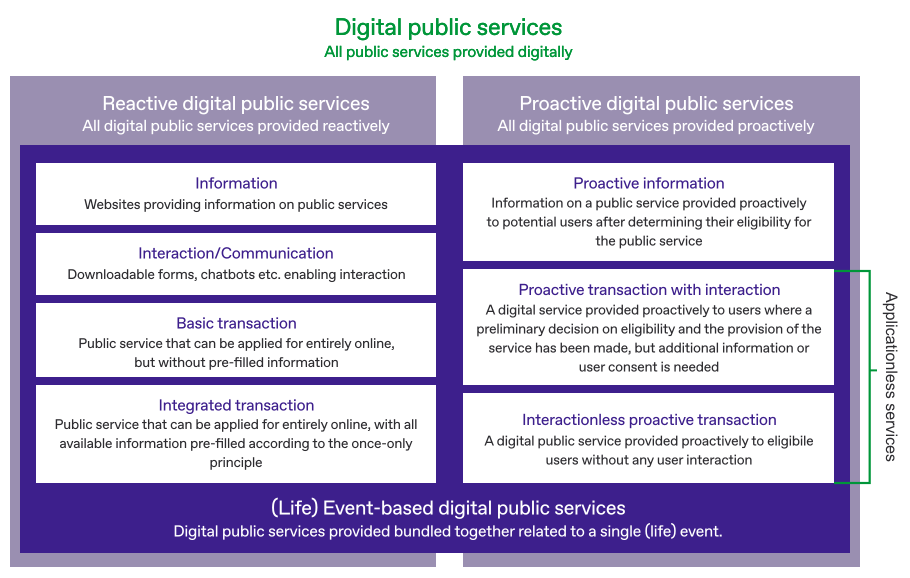
Graph showing public services provided digitally
Figure 1: Proactive public services in relation to other digital public services

In practice, different PPS categories and digital public services are often combined. Additionally, not all public services can be re-designed to be proactive, as this depends on their specific characteristics. Designing user-friendly public services requires a thorough understanding of the underlying services and the ability to combine different digital public services effectively to optimize user experience.

The user and administration side of PPS

PPS always involve at least two different groups: the users or beneficiaries of the public service, and the service providers.

Definitions and maturity scales of digital public services tend to focus predominantly on the user-side.10

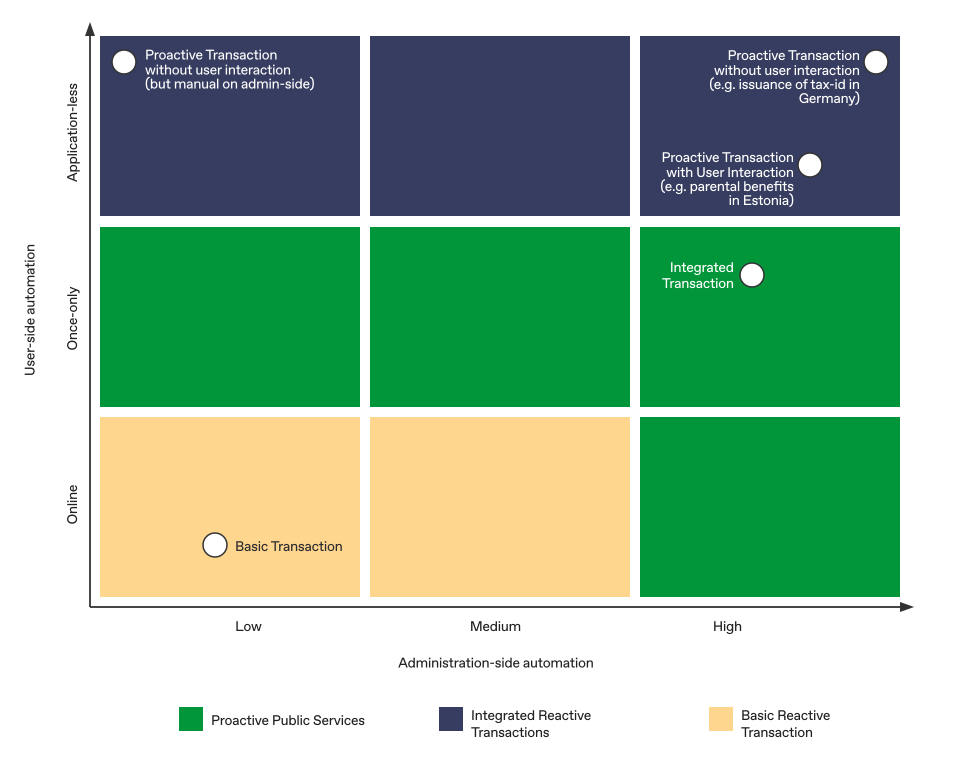
However, PPS’ level of automation (as well as digital public services more generally) on the side of service providers varies substantially and is not necessarily the same as the level of user side automation. In some cases the push to provide digital public services to citizens has even led to more inefficiencies on the side of service providers.11

Proactively rewarding Olympic champions

A proactive public service might be entirely automated for users, while being completely manual for the public agency providing the service. This may seem counterintuitive but can be entirely reasonable given the investment required to build fully automated proactive services. In Estonia, practitioners often use the example of an existing government benefit for winners of Olympic gold medals. All the information required to provide this benefit proactively is easily available and the state has an interest in rewarding its Olympic champions as unbureaucratically as possible.

However, the effort required to build an automated system for this service cannot be justified, as the Olympic Games do not occur often, and Estonia’s 1.3 million inhabitants usually only win a handful of gold medals a decade. Thus, while it does not make cost-benefit sense to automate this service on the side of the administration, it is perfectly reasonable to provide it proactively to gold medalists.

Given increasing pressure faced by governments worldwide to provide services more efficiently to compensate for fiscal restraints and labor shortages, it is crucial to continuously advance the level of automation for both users and the administration-side.

Therefore, it makes sense for maturity scales or any other categorizations of digital public services to consider both user groups and allow for differences in the level of maturity of a digital public service between these two groups.

Digital public services Diagram
Figure 2: User and service provider automation of proactive public services (transactions only)

On the side of users, a proactive approach is necessary to reach the maximum level of automation (and a minimum level of interaction). Only PPS can eliminate the effort required to apply for public services. Reactive digital public services can also be automated, so they do not require interaction by civil servants. Nonetheless, PPS offer distinct benefits for users as well as providers, which are discussed in more detail in the next section.

 Benefits of Proactive Public Services


Making public services digitally accessible benefits users by reducing the effort and resources needed to obtain government services. To obtain offline services, citizens must typically go through the following steps:

Digital public services Figure 3
Figure 3: Typical user journey to obtain a government service.

Reactive digital public services12 already benefit users by drastically reducing the effort needed to obtain the service. Basic transactions such as simple digital forms already create a significant marginal benefit by enabling remote, around-the-clock applications for services and eliminating the need for scheduling and traveling to appointments.

Integrated transactions reduce the time and effort needed for users to process the application. This is due to the implementation of the once-only principle, where all relevant information the state possesses is pre-filled in application forms and any additional information required from other government agencies is made available electronically. At this maturity level, obtaining a service already requires very little effort from applicants. However, proactive public services add two distinct benefits for users: minimizing effort and eliminating the need to be aware about eligibility.

Main benefits for users


01
Minimizing the effort needed to obtain a government service

Proactive public services reduce interactions between applicants and service providers to an absolute minimum. They can eliminate the need to apply for public services and, in their most automated form, require no interaction between applicants and service providers. In this sense, proactive public services represent the apex of digital public service design and user experience.


02
Eliminating the need to gain awareness about user eligibility for government services

The most revolutionary aspect of PPS is their potential to drastically increase the uptake of government services among the eligible population because the state is responsible for identifying eligibility. In this way, proactive services could make policies more effective by increasing the reach of related public services. Because applying for public services is often most difficult for socially disadvantaged groups,13 proactive services could also positively impact social justice.


It is not only service users who benefit from proactive public services – the agencies providing them also benefit to varying degrees, depending on the maturity level of the digital service. A typical user journey of a service provider is described below:

Digital public services Figure 4
Figure 4: Typical user journey of a government service provider.

Basic reactive digital public services have limited benefits to service providers. They tend to be simply electronic versions of the analog application process. This means that information needed from other public agencies is not typically provided in verified, machine-readable form and cannot be processed automatically. The main benefit for service providers at this maturity level lies in receiving data directly entered into application forms and being able to provide the service from anywhere. This enables the creation of shared service centers and can lead to reduced costs. Fewer in-person interactions with clients can also lower stress and increase employee satisfaction.

Integrated transactions can significantly reduce processing times for service providers. This is because the information relevant for decision-making is available in trusted, machine-readable formats, following the once-only principle, thus enabling most data input, verification, and decision-making to be automated. Civil servants’ workloads can be reduced, giving them more time to focus on non-standard cases, which not only reduces cost, but also improves the quality of service.

Re-designing a public service or benefit into a PPS will require drastic changes to the service provider’s ways of working, ideally including that a preliminary decision will be made without users applying for the service. However, there are three distinct benefits to creating a PPS for the service provider: increased reach of services, efficiency of service provision and better understanding of clients.

Main benefits for service providers


01
Increased reach of services and greater policy effectiveness

Users and public administrations benefit from the potentially greater reach of proactive services. Service providers can reach more eligible users and make the policies they’re based on more effective.


02
High efficiency in service provision

As highlighted in the previous section, proactive services can vary in their level of automation. However, the creation of a PPS will often be used to try to create as much efficiency as possible for the service provider.


03
Better understanding of the client base

Proactive services inherently require a detailed understanding of potential users’ eligibility. Any proactive service must establish some sort of mechanism to conduct eligibility checks of all potential users who have initiated the service trigger. This inherently leads to a better understanding of a service’s potential user base than is likely with reactive services. In turn, this can improve the effectiveness of the service and underlying public policies.

Thus, the introduction of proactive public services leads to unique benefits for both users and service providers. The following section illustrates what this looks like in real-life examples of proactive services implemented in Austria, Estonia, and New Zealand.

 Building Proactive Public Services:


Case Studies from Austria, Estonia, and New Zealand


Several countries successfully built proactive public services in the 2010s.14 All of these countries provide an advanced level of digital public services15, yet building such services proved to be a new challenge for all of them. This section highlights how they did it and the lessons that can be drawn from their experiences.

Austria Icon

Austria


Austria is one of the more advanced EU member states with regards to the digitization of their public administration.16 Throughout the early 2000s, Austria undertook several projects to create the foundation for a digital state, including building several e-government portals, electronic identity solutions, as well as a unique interoperability system, based on area-specific identifiers.17 The latter system enables secure data exchange between different government agencies with a strong focus on data protection and privacy.

Austria was also one of the first countries in the world to introduce a PPS. Like many other countries, the first service the Austrian government chose to redesign as a PPS is related to a social benefit for families following the birth of a child. The “applicationless” family allowance18 was introduced in May 2015 to ease parents’ burden of applying for this benefit with various agencies.

The Austrian family allowance is granted for every child whose family lives primarily in Austria. The amount is the same for each child regardless of the parents' incomes. There is, however, an increased family allowance for children with disabilities.
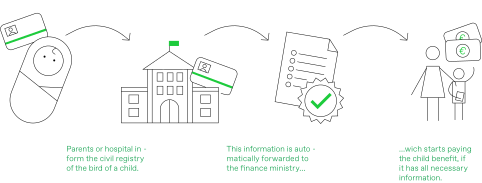
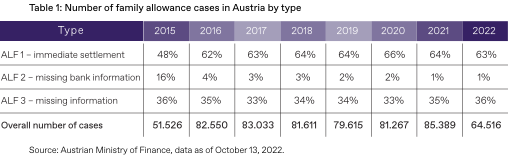
Figure 5

The “applicationless” service aims to minimize user touchpoints by consolidating the involved agencies into a single point of contact. When a child is born, their data and their parents’ civil status data are recorded by the registry office in the Central Civil Status Register (ZPR). This register is operated by the Federal Ministry of the Interior. Once the data is recorded in the ZPR, it is transmitted to the tax administration.

The tax administration is responsible for verifying whether parents meet the requirements for family allowance. In most cases, with the help of the electronic data available to them, the tax administration can automatically verify whether the family meets the criteria.

If the tax administration verifies that the family meets the criteria, the parents do not need to apply or contact their responsible tax office. The tax administration will send a letter to the family notifying them of their entitlement to family allowance.

Simultaneously, the allowance will be transferred to the parents’ account. If the tax administration is unable to verify all the necessary information, it will ask the parents to provide the missing information or answer outstanding questions. In this case, the parents do not need to submit a family allowance application; it is sufficient to provide the requested answers and supporting documents.

The tax administration differentiates cases into three categories, depending on the level of information available in each case. ALF 1 are the cases in which all the information is available, and the family allowance can be provided without interaction. In ALF 2 cases, bank account information is missing, and in ALF 3 cases, other information is missing. The following table shows the annual breakdown of cases into these categories. It indicates that, since 2015, about two-thirds of all family allowance cases have not required user interaction.

Graph showcasing number of family allowance cases in Austria by type

The Austrian government believes that this innovation in family allowance has significantly streamlined the process for families. The new system reduces bureaucracy by eliminating the need to go through multiple authorities and allows quicker payment of the benefit.

Austria also implemented a second PPS related to personal income tax in 2017. 19 This automates the personal income tax declaration for large parts of the population who do not need to declare income beyond their salaries.

Estonia Icon

Estonia


Estonia is internationally recognized as a front-runner in digital government capabilities and innovations. In Estonia, the development and implementation of PPS is viewed as a core component of building a next-generation digital government. In support of the country’s innovative ambitions, the transition to proactive and event-based services was made a top priority in its most recent development agenda, “Estonia’s Digital Agenda 2030.” 20 And in its 2017 regulation describing the “principles for managing services and governing information,” it defines proactive services as:

“Proactive services are the direct public services provided by an authority on its own initiative in accordance with a person’s presumed will and based on data in the state information system’s databases. Proactive services are provided automatically or with a person’s consent.” 21
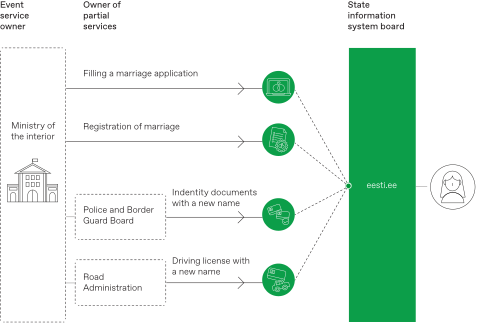
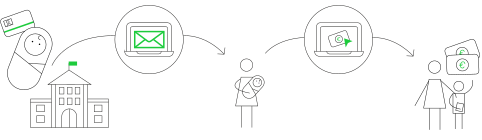
Figure 6

This regulation sets out the necessity of developing proactive public services, how these services should be developed and coordinated, and how information and the overall service ecosystem should be managed.

There is only one truly proactive public service functioning in Estonia today. It was launched in 2019 and is handled primarily by the Estonian Social Insurance Board, which is responsible for paying benefits to new parents, among other duties. The new proactive service takes effect the instant a child is born and registered. Upon registration, parents are sent an email notifying them of their eligibility for family benefits. After clicking on the link and logging into the website, parents simply enter their bank information, and the benefits are automatically registered and transferred.

Figure 7

Research has been conducted to identify more services that could be made proactive. These are related to specific events, such as the birth of a child, marriage, or graduating from university.

Though such services may appear simple on the surface, behind the scenes they are complex, multi-component, and multi-organizational operations. A recent doctoral thesis 22 identified how many components PPS may require across several stakeholder groups.

A proactive service revolving around birth, for example, would require 34 components, military conscription 57 components, death 38 components, and owning a car 26 components.23 To manage this complexity, new technical architectures, legal and technical standards, business processes, and organizational best practices are needed. Such system-wide transformation, making proactivity the default rather than the exception, is required to fully benefit from proactive public services.

New Zeland Icon

New Zealand


New Zealand’s public service has been engaging in a government-wide transformation and reorganization, emphasizing “a spirit of service to the community.”24 This reform and reimagination of the public sector has led to a shift in the mental model, a key component of which is the importance of digital technologies. In particular, New Zealand’s government has prioritized the development and delivery of digitally “integrated” or “federated” public services. This was reinforced in the government’s “2020 strategy for a Digital Public Service” where it was argued that “when someone is required to deal with government, their need is often greater than can be met by a single agency. They may require services from multiple government (and sometimes non-government) organizations, and this can be difficult, especially for vulnerable people or people with accessibility needs”.25 To counteract this, it suggests that integrated (digital) public services are the future and “agencies and third parties will collaborate, co-create, design and deliver more diverse integrated services that are centered around people’s needs.” 26

To bring this transition to fruition, several innovations were required, as the existing regulatory framework seriously inhibited the government’s ability to deliver such services. Silos within the public sector do not have the ability or mechanisms in place to exchange data, even if legally allowed to do so. Writing in 2018, the Controller and Auditor-General of New Zealand noted that “misunderstanding and confusion about privacy laws are still creating barriers to public organizations working together and sharing information” and that there is a need for “agencies to shift their focus and work together on the more complex policy issues that need to be resolved.” They argue that “an increasing focus on delivering integrated, joined-up services to people means that public organizations need to improve the way they use and share information.”27 Thus, for New Zealand to effectively develop and deliver proactive services, it needed to rethink data management, consent, and sharing. The country also needed to develop new technology, methods for organization and cooperation, and standards and best practices for how to create, organize, and deliver such integrated services.

Though such barriers still exist, New Zealand has managed to develop some lower-level PPS (important to note, higher level experiments have been conducted previously as part of a service innovation lab). However, its level of automation is significantly lower than in Estonia and Austria. The two clearest examples of PPS in New Zealand are the SmartStart service, the most well-known of the two, and the Te Hokinga ā Wairua End of Life Service.

SmartStart was launched in 2016 as the first integrated service in New Zealand, requiring integration and cooperation between four organizations: the Department of Internal Affairs, Ministry of Social Development, Inland Revenue Department, and Ministry of Health . The service provided access to all relevant government services related to giving birth and raising a child (55 in total).28 To enable data sharing between organizations and facilitate integrated service delivery, a memorandum of understanding was signed that laid out the necessary data, how it would be shared, and how the data could or could not be stored. The SmartStart service engaged many users, decreased costs, and has been deemed a success both internally and internationally, often being cited as being a great “best practice” case to study. 29
 Lessons learned and prerequisites for proactive public services


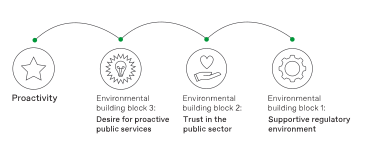
Moving the public sector from a reactive to a proactive modus operandi is not only a technical challenge - it requires substantive changes in organizations as well as legal and regulatory frameworks and approaches. These must be accompanied by a transformation of the dominating mental models within the public sector to be forward looking, citizen-centric, proactive-by-default, and innovative. Such changes are not easy. Several core building blocks are necessary to drive this shift and they can be divided into three overarching categories: environmental, technical and organizational.30

Environmental building blocks encapsulate the broader system, such as public beliefs, trust in government, and legal frameworks that influence the shift towards proactivity. Technical building blocks refer to the core technological foundations necessary to enable proactive public services. Organizational building blocks relate to the organization itself, its structure, processes, employees, and how it interacts with the broader environment. In the following section, we present the most important building blocks for proactivity, which we identified after a thorough research process, including a comprehensive review of the existing literature, discussions and interviews with high-level public sector officials and academics, and comparative case-based research.

Graph - Environmental building blocks

 Environmental Building Blocks


01. Trust in the public sector

As has been discussed, building PPS requires the public sector to have access to a large amount of potential service users’ data and know when to deliver these services. In other words, it knows who you are, what you do, and when things happen. Without a high level of trust in the public sector, having this level of access will be difficult. Without trust, people will be more cautious when using or demanding such services, making it unlikely that a government can effectively deliver PPS. While there are many ways to develop trust, when it comes to proactive public services, transparency is key – both from a regulatory and a technical perspective. In Estonia, citizens have the ability to see who has accessed their data, when, and for what reason. They can also request further explanation of why such data was accessed.


02. Supportive regulatory environment

Developing, implementing, and providing proactive public services must be supported by appropriate regulatory and legislative acts. Such an environment includes, but is not limited to, financial support for developing proactive services, clear regulations that enable the exchange of data between organizations, regulations on data privacy and data collection, transparency supporting regulations (such as the ability to ask what data is being accessed and why), the (digital) means to provide and register consent, requirements for the once-only principle, and the ability to use and accept digital signatures. In New Zealand, funding was a key success factor in enabling the creation of the SmartStart service, whereas confusion around data sharing between organizations has been shown to be a barrier for enabling higher levels of automation and proactivity. Estonia’s PPS’ success is helped by a state-mandated interoperability solution, legal requirements for data sharing and the once-only principle, and regulations that support the use of digital signatures and digital identifiers.


03. Desire for proactive public services

For new digital PPS to be effective, they must be used. If there is no desire for these services, from either the service creator or user, they will not work. Therefore, before building new PPS, it is essential to know that it is actually desired and will be useful. This will require other core building blocks to be firmly in place, such as trust in government and a supportive regulatory environment, as well as active communication and consultation with potential service users. It must be clearly articulated why such a service is being built and what advantages it will bring.

 Technical Building Blocks


01. Digital identity ecosystem

For a service to be digitally provided, it is essential to know who is receiving it. This requires a digital identity ecosystem. There are many ways to build such a system, but, at a minimum, it requires an individual to be attached to an identifier (such as a tax number or personal identifier) and for the service provider to be able to verify this identity. Of the three cases studied, the best example of a digital identity ecosystem is in Estonia, where it plays a key role in enabling the proactive service’s high level of automation. Beyond the provision of proactive public services, digital identity ecosystems are also foundational for building a successful digital government, enabling higher data quality, opportunities for digital signature provision, and more effective service delivery across the board. This also includes the ability to securely identify and authenticate users for those PPS that require user interaction. In the case of Austria’s family allowance, users can add missing information in the tax portal, after logging in with a secure digital identity such as ID Austria.


02. Data

All PPS start with data. Without accurate and up-todate data with well-defined and appropriate metadata available in a clean, machine-readable, and consumable format, it is impossible to develop proactive services. Proactive service providers must understand what data they need for the service, where it is located, how to obtain it, and, furthermore, have the capability to monitor triggering events, such as changes to a specific data point. The importance of data is clearly demonstrated in Austria’s case, in which data-related issues complicate one of every three attempts to proactively deliver the family-allowance benefit.

To obtain the necessary data and develop an infrastructure to deliver proactive public services, special attention must be paid to improving data quality, data governance, implementing data sharing agreements between agencies and ministries, ensuring accurate provision of metadata, implementing the once-only principle, and developing a strong regulatory regime to support data governance best practices.


03. Interoperability platform

PPS require data from several sources, often across ministerial or agency silos within the public sector. To successfully deliver services, it must be possible to exchange, consume, and understand this data. Interoperability is key. Such interoperability is often enabled via centrally developed or mandated interoperability platforms but is also obtainable through other means – for example, through strategically planned data sharing agreements and APIs. In the case of SmartStart, several agreements dictate the means and methods of data sharing, following governmental guidance on how to best implement and deliver services that integrate different data sources. In Estonia, on the other hand, the national interoperability platform, X-Road, facilitates the development of proactive services. However, even this long-established interoperability platform is reaching its technical limits when it comes to life event and proactive public services. Estonia is now reimagining its technical architecture.31


04. Electronic messaging

Proactive public services require the public sector to proactively reach out to users, and so must have a way to message and interact with them. Therefore, a key technical building block for proactive public services is electronic messaging, digital documents, or some other form of electronic communication. Without the ability to interact, communicate, or prompt the service recipient through the internet, it is not possible to build fully digital proactive services. This is demonstrated in Austria, where letters are often needed to prompt users to provide missing information.

In Estonia, users are contacted via email, which is often sent directly from the country’s one-stop shop service portal. However, not everyone updates their email address, which leads to situations where citizens are unaware of being proactively offered a service.

In fact, this is a building block that challenges even the most digitally advanced countries. In Estonia, for example, the government learned during the initial COVID vaccination drive for older people that it is difficult to proactively reach older people through its national digital mailbox.

 Organizational Building Blocks


01. Appropiate business processes

A key building block from an organizational perspective is ensuring that, for any planned proactive service, the business processes behind the scenes are supportive. This requires a comprehensive understanding of all business processes related to service provision, clear identification of potential obstacles, understanding potential trigger points for proactive services, and, where needed, updating existing business processes to be compatible with the newly planned proactive service.


02. User-centric and proactive service design

In addition to changing business processes, it is also important to change how the services themselves are designed and built. By transitioning to a more user-centric design process, where feedback from service recipients is sought throughout the process, the proactive service is more likely to meet their needs in a comfortable and easy-to-use way. This also requires a change in how services are developed, with a shift from traditional waterfall methods of service development and delivery towards approaches that are agile, iterative, and co-creative. This was a key lesson from New Zealand, where earlier attempts at utilizing a waterfall development approach led to failure. Ultimately, developing PPS is different from other forms of digital services. They are more complex, involve more actors, and require different ways of using data. Therefore, it is necessary to develop clear design standards specifically for proactive public services.


03. Proactive and cooperative mindset

Developing PPS requires a change in the mindset and mental model of the organizations involved. To deliver a service proactively, one must adopt an innovative way of thinking and be open to cooperation. This also requires a new approach to how the organization – often several agencies together – provide services, rethinking business processes, and reimagining internal values, making proactivity the norm. Investments must be made in re- and upskilling, developing the necessary capacities and skillsets to create and deliver proactive services. Leaders are key in driving this change; they need to build an organization-wide understanding of the importance of proactivity.

 Recommendations


Transforming into a proactive government is essential for the public sector in today’s information society. It is an integral part of a broader effort to make digital public services easier and faster for people to use, and more efficient for public administrations to provide. PPS are becoming part of the toolkit that every government should be expected to have.

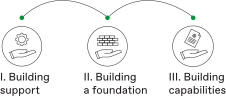
To successfully develop and implement these services, it is important to have a clear understanding of how to build them and how to avoid the pitfalls they entail. Recommendations based on the lessons-learned in the first few countries to establish such services are offered below. These fall into three distinct areas:

Graph - PPS Building phases
Hand + cog + circle icon

I. Building Support

The transition to a proactive government is a lengthy and costly process, requiring a significant mindset shift among many public sector stakeholders, which must also be reflected in laws and regulations. The sheer scale of this transformation makes broad support in the government and public administration an inevitable prerequisite. Therefore, a full-scale transition to proactive government needs political support and sufficient funding to experiment with and develop new proactive public services.

Developing PPS requires reconceptualizing the nature of the public sector and how services are delivered, with proactivity becoming the default. To facilitate the shift towards proactive government, the public administration must be willing and able to experiment with imperfect systems.

Practical experiences with the first proactive public services show that their successful implementation raises citizen’s expectations. Therefore, the best way to gain support for a proactive government among citizens may be to let them experience its added convenience firsthand.


Hand + bricks + circle icon

II. Building a Foundation

Transitioning to a proactive government, which requires implementing PPS at scale, is difficult and impractical without a solid foundation for digital government in place. This includes the technical, legal, and environmental building blocks outlined in Section 5.

Without such a foundation, transitioning to a proactive government will prove costly and inefficient. Therefore, it may not be a suitable use of resources for governments to try to build highly sophisticated proactive services on a large scale if they do not have sufficiently mature technical, legal, and organizational building blocks in place.

However, even without having all the building blocks, it may still be reasonable to attempt to build a small number of proactive public services to gain experience. It could be feasible to build proactive public services in certain areas or at a lower maturity level. For example, proactively informing citizens about expiring drivers’ licenses, passports, or ID cards rarely requires interagency data exchange, and can be easily implemented as a digital service if governments have a way to reach citizens.


Hand + document + circle icon

III. Building Capabilities

Even with sufficient support and solid foundations in place, building sophisticated PPS is significantly more complex than implementing standard services. Governments around the world need to build new capabilities and skills to efficiently build and provide proactive public services.

Sophisticated PPS combine services and data from several different government agencies. Inter-agency cooperation and multi-stakeholder management are essential to successfully create these services. This requires political support, as well as the development of interdisciplinary and cross-departmental teams to communicate and exchange information and ideas. Including lawyers on these teams is crucial, as they possess the knowledge and expertise to navigate relevant regulations and advance innovative ideas that comply with legal requirements.

These teams also need to be highly skilled at analyzing and re-designing processes, dataflows and regulations underlying many different public services related to a specific trigger event. They must be able to take an iterative and step-by-step approach to a growing number of public services to reduce the complexity of the transition to proactive service provision. Further, in designing services, they need to understand users’ needs and struggles to maximize their benefits. Building and empowering such teams is essential to creating effective proactive public services that meet the needs of citizens.

Finally, a crucial skill for public officials working on the transition towards a proactive government is to understand which services and benefits are suitable to be re-designed into PPS and how to make these determinations. This has turned out to be a challenge even for the most digitally advanced governments in the world. See our in-depth guidance on what criteria should be used to evaluate whether existing public services and benefits can be made proactive.


 Bibliography


  1. Bogumil, J., Kuhlmann, S., Heuberger, M., & Marienfeldt, J. (2022). Verwaltung digital?
  2. Buslei, H., Geyer, J., Haan, P. & Harnisch, M. (2019). Starke Nichtinanspruchnahme von Grundsicherung deutet auf hohe verdeckte Altersarmut. DIW Wochenbericht, 86(49), 909-917.
  3. Chaushi, A., Chaushi, B.A. & Ismaili, F. (2016). Measuring e-Government Maturity: A Meta-Synthesis Approach. SEEU Review, 11(2), 51-67.
  4. Erlenheim, R. (2019). Designing Proactive Public Services. Doctoral Thesis, TalTech Press, 47/2019.
  5. Goedemé, T. & Janssens, J. (2020). The Concept and Measurement of Non-Take-Up. An Overview, with a Focus on the Non-Take-Up of Social Benefits, Deliverable, 9.
  6. Linders, D. & Wang, C.M. (2013, October). Proactive e-Governance: Flipping the Service Delivery Model in Taiwan. Proceedings of the 7th International Conference on Theory and Practice of Electronic Governance, 154-157.
  7. Lynn, T., Rosati, P., Conway, E., Curran, D., Fox, G. & O'Gorman, C. (2022). Digital Public Services. Digital Towns: Accelerating and Measuring the Digital Transformation of Rural Societies and Economies, Springer Nature, 49-68.
  8. Nortal (2020). Identifikatoren als Grundlage eines leistungsfähigen eID-Ökosystems.
  9. Pawlowski, C. & Scholta, H. (2023). A Taxonomy for Proactive Public Services. Government Information Quarterly, 40(1).
  10. Peña-López, I. (2020). Digital Government Index: 2019 Results.
  11. Scholta, H., Mertens, W., Kowalkiewicz, M. & Becker, J. (2019). From One-Stop Shop to No-Stop Shop: An e-Government Stage Model. Government Information Quarterly, 36(1), 11-26.
  12. Tornatzky, L. G., Fleischer, M., & Chakrabarti, A. K. (1990). Processes of technological innovation. Lexington books.

Get in touch

Learn more about how to build a human-centered government, provide a better public service experience and efficient public administration.