Search
Explore digital transformation resources.
Uncover insights, best practises and case studies.

Search
Explore digital transformation resources.
Uncover insights, best practises and case studies.
Authors: Kertti Merimaa (Principal, Digital Healthcare (Estonia), Nortal), Grace Smith (Principal, Digital Healthcare (UK), Nortal), Tanel Ross (Healthcare Expert, Tallinn University of Technology), Andres Raieste (Senior Vice President, Public Sector (Global), Nortal).
Globally, healthcare systems face mounting pressures from aging populations, rising treatment demands, and escalating costs, straining resources and exacerbating workforce shortages.1 By 2030, the healthcare workforce gap is projected to exceed 10 million, placing a significant burden on clinicians and caregivers.2 Meanwhile, patient expectations are shifting toward healthcare services that match the responsiveness and convenience of other digital experiences—a demand that many systems are unprepared to meet without structural reform.3
Healthcare is collapsing under its own weight. To meet the rising demands, health systems need to reform. Health service provision and physician-patient relationship models, that have stayed broadly similar to how they were a century ago, now should be redesigned. The only way to do so is smart digitalization—not only migrating old analogue, paper-based practices to the computer, but changing the very foundations of everyday processes and service models to cleverly use the abundance of health data and digital connectedness enjoyed in other domains. Furthermore, smart, strategic digitalization is the only key to unlock the promises of value-based care models, while making sure that the specialists still in the system are not facing burnout and can focus on what’s most important, patients and empathetically supporting their health.4
In response to ever-increasing demands to digitalize and show fast results, healthcare leaders often, and understandably, turn to short-term digital solutions.5 While these “quick wins” offer immediate relief, they fail to address the deeper structural issues that permeate complex healthcare systems— nor do they provide the sustainable systematic infrastructure to continuously build upon or deliver transparency needed to confront legitimate public concerns around personal data use, critical to embedding long-term, widely-adopted solutions. It is no surprise that systems become mired in digital stagnation, leaving both frontline workers and patients to bear the burden.
This paper argues that digital transformation can only bring about the long heard promises when it is designed and delivered in a systematic and comprehensive, ecosystem supporting way. While cultural models like 4P or 6P6, data value enhancing approaches and standards like openEHR or FHIR7 or overall domain-driven design practices support the effort in an ideological way, there is still a need for practical approach that systematizes the digitalization journey while providing actionable recommendations that would support the transition.
This white paper provides a practical roadmap for healthcare systems to rapidly embrace digitally enabled personalized healthcare and address both urgent challenges and future demands.
Our approach is grounded in a phased approach to digital transformation, ensuring that value-driven enhancements don’t require a costly overhaul. Instead, we recommend how systems can build intelligence and automation on top of existing infrastructure, creating immediate and long-term value without disruption while ensuring systematicity and sustainability in the setup. This strategy is scalable, evolving healthcare systems from data interoperability toward predictive, AI-powered ecosystems that continuously improve.
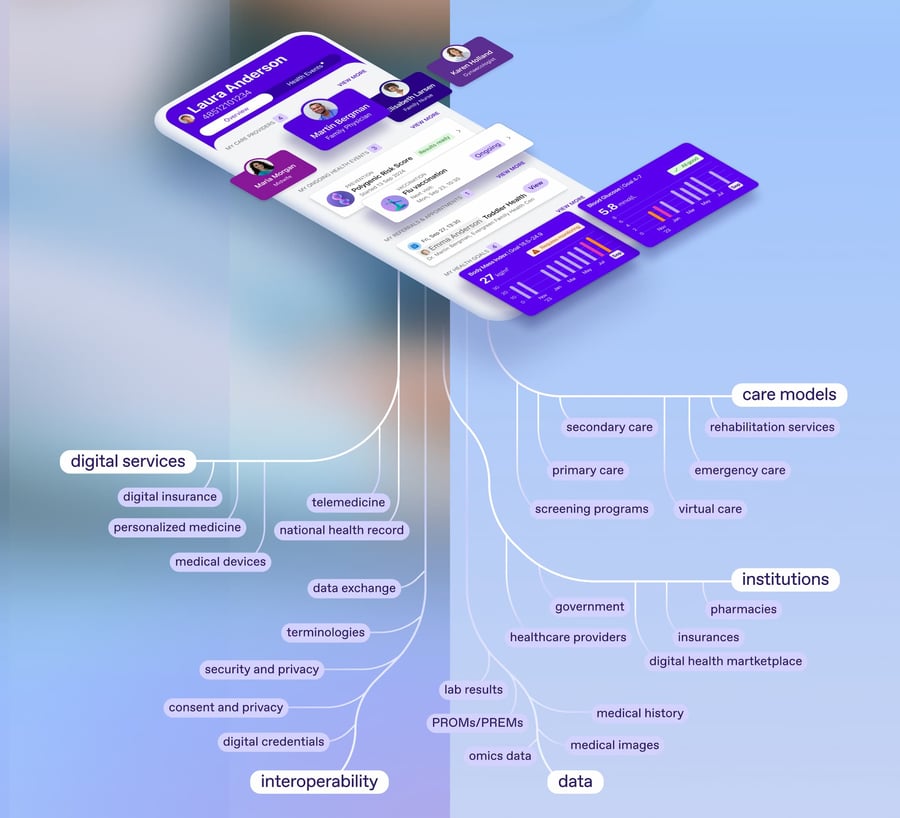
The structure of this paper guides healthcare systems through this transformation:
Desired outcomes:
Showcasing how the digital transformation will help to achieve the three most important objectives for healthcare systems across the world: to expand access to care, enhance the quality of healthcare services and achieve all that in a sustainable way.
Key policies and recommendations:
Examining the foundational policies necessary for this transformation, including fostering a whole-of-society approach, ensuring trust and transparency through ethical data use, and empowering strategic investment in person-centred healthcare solutions.
Implementation approach:
A step-by-step guide to layered systematization of digital transformation that organically supports a well-functioning health system, progressing from basic data exchange to intelligent systems that personalize care and boost efficiency.
Personal healthcare in practice:
Real-world examples demonstrating how intelligent systems can deliver smarter, more sustainable healthcare, improving both patient outcomes and operational efficiency.
The vision for healthcare services to become more effective through personalization emphasizes the opportunity to fundamentally reimagine healthcare systems, making them more responsive, scalable, and adaptable to evolving needs. By addressing today’s urgent challenges and building toward sustainable digital infrastructure, this transformation empowers systems to continuously improve outcomes for both patients and providers while keeping costs at bay. Ultimately, this vision offers a path toward more effective, intelligent healthcare ecosystems that not only respond to present demands but also adapt and innovate to meet the needs of the future.
Healthcare systems are grappling with a unique set of pressures that threaten their resilience. An aging population and rising emergency care needs are driving demand to unprecedented levels, while socioeconomic and regional disparities underscore an urgent need for equitable service delivery.8 Compounded by high rates of workforce burnout9, these challenges have pushed systems to the edge, revealing the limits of outdated, reactive models.10 To meet these demands sustainably, healthcare must move toward a systematically digital approach that empowers frontline providers to deliver responsive, integrated, and high-quality care.
Traditional healthcare delivery models have long been reactive and provider-centered, with technological investments primarily focused on administrative efficiency and centralized management. While innovations such as Electronic Health Records (EHRs) and diagnostic imaging have improved clinical precision and operational workflows, they have not fully addressed systemic inefficiencies.11 As Lord Darzi noted in his recent report on the National Health Service (NHS) in England, healthcare systems like the NHS have experienced what he describes as “capitalism-in-reverse,”12 where investments in labor consistently outweigh those in digital technologies and infrastructure, leading to limited productivity gains despite substantial effort. This imbalance underscores the limitations of traditional models, which continue to face challenges in interoperability and resilience. The COVID-19 pandemic starkly exposed these weaknesses, demonstrating how fragmented systems struggle to respond swiftly to crises or meet patients’ evolving needs for accessible, integrated care.
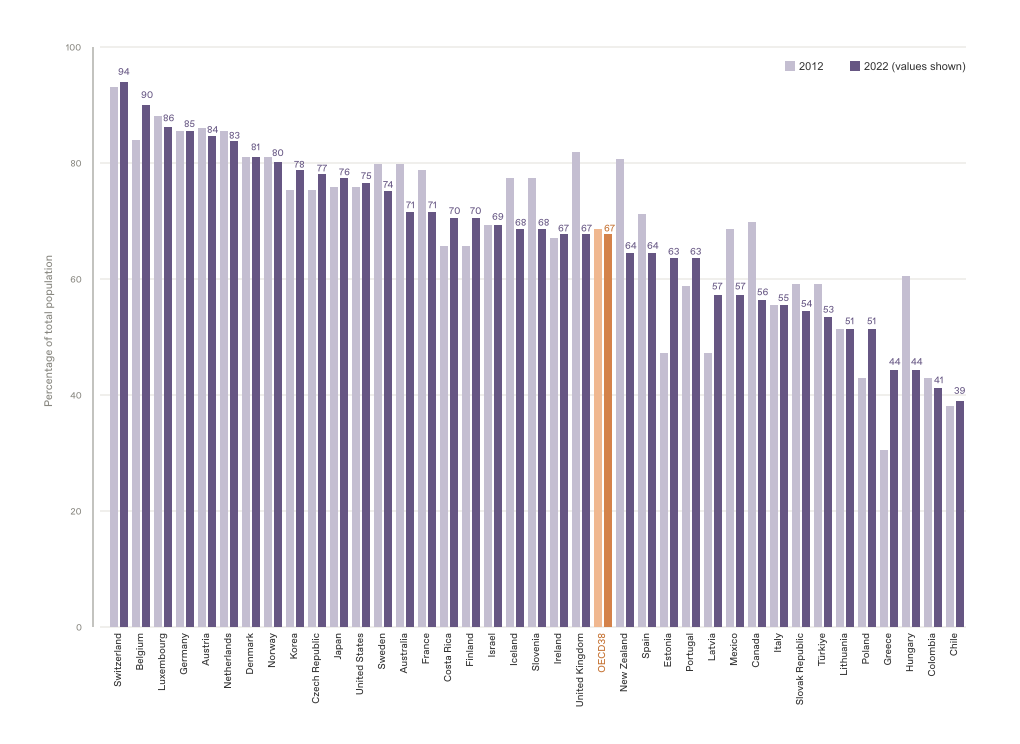
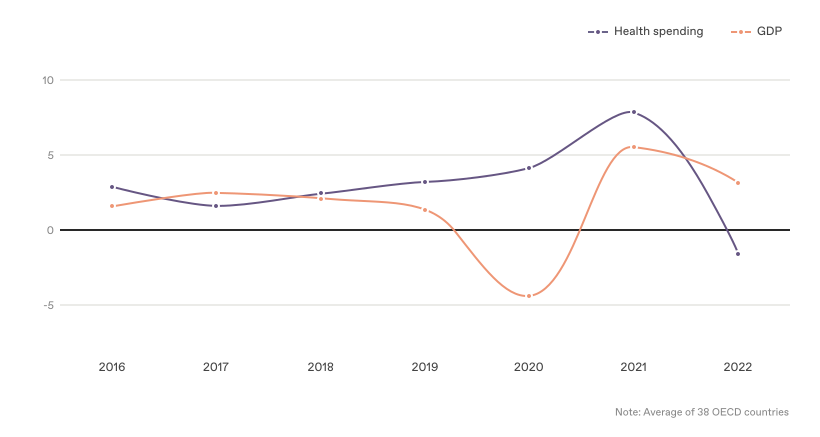
Addressing these challenges requires a reimagined, system-wide approach to healthcare centered on a personal healthcare model that places the patient at the heart of every service and interaction. This model goes beyond isolated technological improvements, embedding the principles of consumerization—which positions individuals as active participants in their health—and value-based care, where the system is structured to deliver tangible health value for individuals and society.
Each component of this model—technology, public sector governance, and individual empowerment—is an essential pillar that upholds the entire healthcare system. In a person-centered, value-driven system, technology becomes an enabler of patient empowerment and continuous, personalized care across the entirety of the health ecosystem.
This model also emphasizes coordinated care across health and social services, enabling patients to navigate seamlessly among providers, with each interaction contributing to a holistic view of their wellbeing. Unlike traditional models, which reinforce provider-driven, episodic care, a personal healthcare system integrates services around the individual’s needs, empowering them as informed agents in managing their health.
Why this approach works: Evidence and rationale
This systemic shift to a person-centered, value-based model is supported by evidence pointing to integrated care’s transformational impact. High-quality, interoperable health data forms the backbone of this approach, enabling seamless coordination across providers, evidence-based policymaking, and real-time decision-making that benefits both individuals and the system as a whole.13
Studies have consistently shown that when patients have control over their health data and engage actively in their care, outcomes improve, and health equity is enhanced.14This systematic review demonstrated that integrated care models lead to better patient satisfaction, improved health outcomes, and reduced hospital admissions, particularly when patients are actively involved in managing their own care.
Beyond this, healthcare can evolve sustainably by embedding intelligence and interoperability across the entire system; leveraging AI and predictive analytics to anticipate needs; optimizing resources; and supporting preventative, continuous care.15 This layered, scalable transformation approach minimizes costly, disruptive overhauls, gradually allowing systems to build resilience and adaptability.16
The public sector plays a vital role in fostering this transformation. Government-led standards, data governance frameworks, and investments in data infrastructure are essential for ensuring that health data remains secure, accessible, and equitable. By establishing a cohesive framework that aligns stakeholders and ensures interoperability, the public sector can enable a unified, interconnected health system that serves both individual and societal needs. Ultimately, the success of this transformation relies on the public sector’s ability to unify the ecosystem through effective governance, standards, and infrastructure investments, solidifying the foundation for a future-ready healthcare model.
Health systems must embrace this holistic personal healthcare model to survive—and thrive. This approach harnesses the full potential of health data and technology to move beyond simple digital adoption, creating a resilient, adaptable, and patient centered healthcare system that can meet both current and future demands.
Adopting a system-wide, digital healthcare model offers transformative potential, delivering measurable outcomes that address immediate pressures while ensuring long-term resilience. By establishing a unified, integrated approach to health, digital health systems provide three essential benefits that together contribute to a sustainable, equitable, and high-quality healthcare future: better access to care, sustainable healthcare expenditure, and higher quality of care.
01. Better access to care
Access to comprehensive, high-quality healthcare is essential for promoting health, managing disease, and advancing health equity. Yet, the World Health Organization reports that more than half of the global population lacks access to essential health services,17 with significant disparities in both availability and quality of care even within economically advanced OECD regions.18 Improving access does not mean always providing every service to everyone; instead, it involves delivering appropriate, timely, and cost-effective care tailored to population needs.
Case example:
Denmark
Denmark’s healthcare model exemplifies how digital health solutions expand access. The Sundhed.dk national health portal offers every citizen secure access to their health records, appointment scheduling, and digital prescriptions.19 Additionally, Denmark’s broad adoption of telemedicine has allowed patients in remote or underserved areas to access specialized care that would otherwise be unavailable, thus breaking down geographical and logistical barriers.20
By prioritizing interoperability and accessibility, Denmark has created a health ecosystem where patients are central participants, empowered to manage their own care. This model illustrates that digital tools are not just supplemental but foundational to patient-centered care, motivating individuals to engage in preventive health behaviors and enabling a proactive approach to health management. Improved access combined with patient empowerment is achievable and essential for equitable health outcomes.
02. Higher quality of care
Quality of care extends beyond clinical outcomes to include patient experience, satisfaction, and continuity across all stages of healthcare. High-quality care demands a shift from reactive treatment to proactive, individualized care that considers the entire patient journey and integrates various health needs.27
Case example:
United States - leading hospitals
The world’s top hospitals, such as the Mayo Clinic, Cleveland Clinic, and Massachusetts General Hospital, demonstrate how investments in advanced technology drive higher-quality care. These institutions have adopted AI-driven predictive analytics for early diagnosis, robotics for surgical precision, and digital imaging for accurate diagnostics, each contributing directly to improved patient outcomes.
For instance:
These examples show that advanced technologies are crucial to delivering high-quality, data-informed care. By adopting similar investments, health systems can enhance diagnostic accuracy, treatment outcomes, and patient satisfaction, supporting an infrastructure where patient-centered, high-quality service is a universal standard.
03. Sustainable healthcare expenditure
The global healthcare sector faces rising costs driven by aging populations, increasing treatment demands, and expanding chronic disease burdens. Traditional healthcare models struggle to balance these costs with limited resources, highlighting the need for digital transformation to maximize value and reduce financial strain.21
Strategic investments in digital health infrastructure delivers immediate cost savings by reducing redundancy and streamlining care, and they also yield significant long-term returns. These investments support sustainable resource management over time by enabling preventive, data-driven healthcare and reducing the need for costly emergency interventions. Focusing on interoperable systems and value-driven outcomes creates a foundation for continuous improvements, allowing health systems to meet future demands without escalating costs. This long-term perspective ensures that digital transformation initiatives align with fiscal sustainability, ultimately making high-quality care affordable and accessible on a lasting basis.22
Case example:
Estonia
Estonia’s healthcare system showcases how comprehensive digital solutions can drive sustainability in healthcare. With its centralized National Health Record (NHR), Estonia provides an exemplary interoperability model, where patient data from various sources—including the national genome database, medical laboratories, and medical devices—can be securely exchanged and accessed by healthcare providers nationwide. This unified view of patient data significantly reduces duplicative tests and enhances care coordination, resulting in greater efficiency and cost savings across the system.23 The X-Road infrastructure, Estonia’s open-source data exchange layer, underpins this integration. X-Road connects healthcare providers, enabling them to access a patient’s entire medical history seamlessly.24 This infrastructure supports personalized medicine initiatives, such as pharmacogenetic testing, which allows patients to receive tailored treatments based on their genetic profiles. Patients can order personalized medical services and have their results securely added to their National Health Record, creating a streamlined approach to individualized care accessible across care settings.
The efficiency of this system translates directly into financial benefits. By minimizing redundant procedures and enhancing administrative efficiencies, Estonia’s digital public services save approximately 2% of GDP in operating costs annually.25 Digitalization has played a part in Estonian ability to keep public healthcare spending relatively low considering the remarkable advances in healthcare outcomes in the past 30 years. Estonia’s approach to data governance ensures robust consent management, allowing patients control over their health data and granting providers secure access when needed. This focus on data integrity and interoperability enables the healthcare system to adopt a value-based approach, prioritizing resources based on meaningful patient outcomes rather than service volume.26 Estonia’s model demonstrates that strategic investments in digital infrastructure can foster financial sustainability, allowing health systems to deliver high-quality care within economic constraints. As countries worldwide grapple with escalating healthcare costs, Estonia’s approach illustrates that by integrating patientcentered, interoperable data systems can optimize resource allocation, enable preventive care, and reduce long-term expenses.
As healthcare systems grapple with rising demand, workforce shortages, and financial pressures, achieving sustainable, high-quality care demands a shift toward a model centered around the individual. This vision of patient empowerment enables individuals to take an active role in their health with accessible, integrated services that address their needs holistically. Paired with value-based care, this approach prioritizes real health outcomes that benefit both individuals and society, ensuring resources are allocated effectively to promote universal access and health equity.
To realize the outcomes outlined in the previous chapter—better access, sustainable expenditure, and higher quality of care—health systems require a cohesive set of policies addressing sustainable healthcare’s fundamental building blocks. This must address both the broader determinants of health and the systems that support secure, interoperable data, enabling coordinated, efficient care delivery. This paper emphasizes three core areas: a whole-of-society approach, ethical use of data, and strategic digital investments.
Together, these policies create the structural foundation for a healthcare system capable of meeting today’s demands while paving the way for resilient, person-centered care in the future.
Whole-of-society approach: Creating a unified healthcare ecosystem
Effective health and wellbeing outcomes require coordinated efforts across healthcare, social services, education, and community support systems. By aligning goals and sharing resources across sectors, healthcare systems can address the root determinants of health, moving beyond clinical care to proactively support individuals’ overall wellbeing. This approach involves establishing collaborative frameworks and shared priorities, ensuring that stakeholders at all levels contribute to a cohesive, patient-centered care ecosystem. Public sector leadership is essential in facilitating these partnerships and guiding resource allocation to maximize societal impact. A whole-of-society approach thus creates a foundation for health equity, making it possible to integrate comprehensive support into a single, responsive system that adapts to the population’s evolving needs.31
In legacy-heavy environments, obstacles to a whole-of-society approach are typically twofold: fragmented systems with siloed data that obstruct interoperability, and governance structures that lack the agility to support cohesive, multi-sectoral initiatives.32 Moving toward a more collaborative, patient-centered model begins with a commitment to shared goals across sectors. Public bodies can lead this shift by defining common health and social priorities, facilitating interagency agreements, and forming communitybased coalitions focused on health equity. Establishing frameworks for collaboration in areas like mental health access and preventive care allows stakeholders to align efforts and resources, building a collective commitment to outcomes that benefit the entire system. Formalized partnerships through shared funding mechanisms and joint policy objectives create a strong foundation for addressing the interconnected nature of health and social needs.
An investment in Digital Public Infrastructure (DPI) is essential to support these aligned goals.33 DPI provides the backbone for interoperable systems, enabling seamless data exchange and coordination across health and social services. Health systems can incrementally reduce fragmentation and enhance care continuity by adopting globally recognized standards and focusing on high-impact data flows, such as patient health records. Modular digital infrastructure, designed to grow with evolving needs, allows for scalable, interoperable solutions that support current services and future innovation. National and cross-sector services, such as integrated booking systems, enhance accessibility, creating a cohesive network that supports both public sector requirements and the broader accessibility goals where market solutions may not suffice.
Engaging the private sector is crucial in accelerating innovation and testing new solutions. Public-private partnerships, focused on pilot projects or small-scale initiatives, allow health systems to refine processes and technologies before broad implementation. Collaborative efforts with tech firms and social organizations can help test secure data-sharing platforms or patient portals that prioritize privacy and security. Aligning these partnerships with public sector goals fosters patient-centered innovations that are scalable and equity-focused, contributing to improvements across the system.34
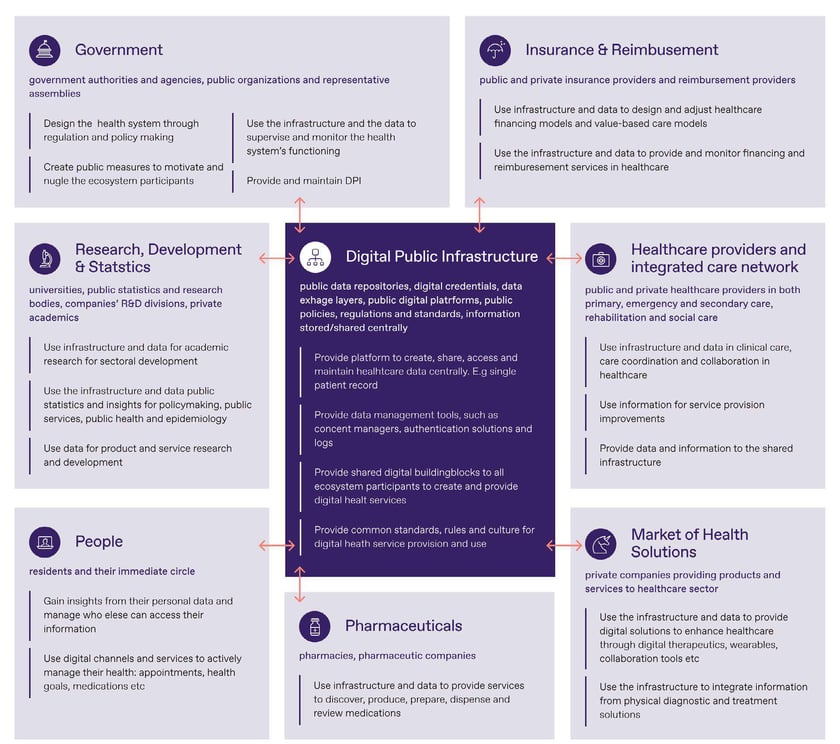
The role of government, however, is pivotal in orchestrating and enabling this ecosystem-wide transformation. Moving beyond regulation, the government acts as a system enabler by setting national standards for data interoperability and supporting essential digital services that facilitate cross-sector coordination. A cohesive interoperability strategy, underpinned by equitable funding allocations for community health and preventive care, reinforces the valuebased, person-centered care goals that underpin this model. Value-based funding models, designed around community health outcomes, that are only implementable in truly digitally integrated health system, create an equitable, results-driven approach, ensuring that resources flow toward the areas of greatest need and impact.
Together, these elements form a cohesive framework for transformation, aligning health systems to meet the complex demands of today while laying the foundation for a resilient, integrated, and person-centered approach to healthcare in the future.
Key recommendations
Democratization and ethical stewardship of health data
Empowering individuals with control over their health information is essential to advance personcentered healthcare. This democratization of health data enables individuals to participate actively in their care and lays the groundwork for a healthcare system that is more responsive, personalized, and equitable. Ethical stewardship of data, grounded in transparency and trust, ensures that patients feel secure in sharing their information, knowing it will be managed with integrity. Together, these elements create the confidence required for a robust, data-driven health ecosystem that benefits both individuals and society.35
Data democratization, however, must extend beyond individual empowerment and control. To unlock system-wide benefits, it must be embedded within a framework that enables secure, seamless data exchange across healthcare providers, research institutions, and public health agencies. Supported by a robust Digital Public Infrastructure (DPI), this framework allows data to be shared and used collaboratively and ethically, creating a foundation for shared insights, quality improvement, and innovation.
Enabling patient empowerment and control through transparent design
A growing number of countries are demonstrating how patient access to health information can empower individuals while strengthening public trust. When patients are given control over who can view specific parts of their health data, they are more likely to engage in their care, resulting in more informed decision-making and improved health outcomes.36 Research highlights several key mechanisms that contribute to this empowerment:
When integrated into healthcare systems, data democratization can yield significant societal benefits. Studies suggest that enabling patients to actively manage and share their health data enhances care coordination, aligns treatment plans with individual needs, and is associated with better clinical outcomes40. Furthermore, allowing anonymized health data to be shared for research purposes facilitates advancements in evidence-based policymaking, population health management, and targeted healthcare innovations, contributing to a system that balances individual needs with public health goals (WHO, 2024).”
As an example, Estonia’s health system emphasizes that individuals own their data, a framework that has built a high level of public trust. In recent years, the share of mobile users on the health portal has increased to two-thirds, reflecting growing confidence in digital health solutions and the usability of the system.41
Data exchange as the foundation of person-centered care and innovation
A truly integrated, personalized healthcare model depends on a data ecosystem prioritizing secure interoperability and responsible data sharing. Effective data democratization extends beyond individual access to enable seamless data exchange across the healthcare sector, enhancing care coordination, supporting research, and improving overall system efficiency. When anonymized data is responsibly shared, it fuels breakthroughs in clinical research, informs public health strategies, and drives innovations that benefit both individuals and society.42
Embedding data democratization and stewardship within Digital Public Infrastructure (DPI) helps establish a high-trust, adaptable healthcare environment where data is a valuable public good. This infrastructure enables equitable, effective care while supporting the healthcare system’s evolution to address emerging needs and technological advancements. Maintaining rigorous standards for data privacy and security is critical for public trust. Transparent governance practices, such as access logs and regular audits, assure patients that their data is protected and used responsibly to enhance care quality and support ethical research.
Key recommendations
Strategic investment in digital personal healthcare
As healthcare moves toward a personal, patient-centered model, future health systems must be equipped to deliver tailored care and adaptable, proactive services that evolve with individual needs and population health trends. By embedding the 4P framework—Predictive, Preventive, Personalized, and Participatory care—into the healthcare ecosystem, systems can foster resilience and ensure that healthcare remains responsive to current and future demands. Strategic investments in data interoperability, intelligent technology, and integrated platforms create a foundation for healthcare that supports each patient’s unique journey with actionable insights, life-event-based pathways, and seamless coordination.
Key components of data-driven health innovation
Effective personal healthcare requires systems that derive meaningful insights beyond basic data exchange. From predictive analytics to the latest in generative AI, systems enable healthcare providers to personalize interventions by identifying risk factors, predicting treatment responses, and designing preventive measures tailored to everyone. For example, these tools analyze a patient’s health trajectory to flag early signs of chronic conditions, establishing proactive care pathways grounded in comprehensive, longitudinal data. Integrated clinician dashboards offer a unified view of a patient’s history and treatment plans, enhancing decision-making and continuity.
A shift from reactive to preventive care is essential for data-driven healthcare.
Predictive algorithms identify at-risk patients before conditions escalate, enabling timely, targeted interventions—such as lifestyle counseling for cardiovascular risk—focusing on keeping people healthy and mitigating disease progression.
Aligned with quality metrics, strategic health planning allows systems to prioritize resources effectively, ensuring care quality and efficient allocation to meet societal health needs. Personalized health coaching tools and proactive alerts further empower patients to engage in preventive practices, promoting longterm wellness.
Supporting each patient’s journey through an interoperable data environment ensures continuity of care, allowing health information to follow the patient across providers and services. Digital platforms enable e-consultations, shared care pathways, and real-time data updates, delivering a consistent, coordinated care experience from initial consultations to ongoing specialist support. Centralized appointment booking and e-prescription services improve accessibility and convenience, particularly in underserved areas.
Resilient, adaptive health systems are necessary, learning continuously from individual health data and broader health trends. Embedded feedback loops—driven by patient-reported outcomes—enable systems to self-optimize, refine care practices, allocate resources effectively, and ensure that quality care is accessible and adaptive to evolving patient needs. Digital portals for patient feedback and data-driven feedback mechanisms aggregate patient insights, helping providers make continuous improvements that align with patient needs.
Strategic public sector investment and policy are vital in sustaining these transformations. Government support for digital health infrastructure, interoperable data standards, and health data governance frameworks ensures systems are built on a robust, secure foundation. By developing shared health data standards and incentivizing innovation, the public sector fosters an environment where patient-centered, data-driven care thrives.
Key recommendations
Creating a sustainable, vibrant digital health ecosystem is a shared aspiration across health systems worldwide—from national governments to regional and local services. Yet, while many healthcare systems demonstrate high readiness for digital transformation, practical barriers often hinder full implementation. For example, although 90% of OECD countries have electronic health portals, fewer than half offer full interactivity for public access to personal health data.43 This gap highlights a missed opportunity for truly engaging and empowering patients through digital tools that go beyond mere access to medical documentation.
To turn strategic goals into reality, healthcare systems require a structured approach to implementing a digital ecosystem. This Deployment Framework offers a pathway for realizing these objectives, establishing a foundation that enables patient-centered, proactive, and adaptive healthcare services. This approach, built on four distinct yet interconnected layers, ensures that healthcare systems progress through a guided implementation, making measured investments that foster innovation and support long-term sustainability. The framework emphasizes practical actions, ensuring that digital healthcare advancements are executed with a focus on scalability, resilience, and measurable outcomes.
Establishing open digital infrastructure:
Laying the foundational network, regulation and standards that enable secure, interoperable connections across healthcare and whole public sector.
Standardized Healthcare data exchange:
Enabling health information to move seamlessly across systems, institutions, and regions, allowing providers and patients to access the data they need, when they need it.
Services to increase efficiency and productivity:
Rolling out scalable public digital services that target high-impact areas, enhancing efficiency, reducing costs, and setting an example for broader adoption.
Driving personalized, proactive health outcomes:
Leveraging the mature digital ecosystem to deliver advanced, outcome-focused services tailored to individual needs and support preventive, personalized care.
01
Establishing open digital infrastructure:
Laying the foundational network, regulation and standards that enable secure, interoperable connections across healthcare and the wider public sector.


02
Standardized healthcare data exchange:
Enabling health information to move seamlessly across systems, institutions, and regions, allowing providers and patients to access the data they need, when they need it.
03
Quick-win services to increase efficiency and productivity:
Rolling out scalable public digital services that target high-impact areas, enhancing efficiency, reducing costs, and setting an example for broader adoption.

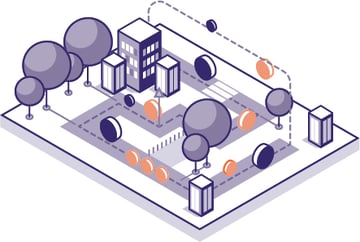
04
Driving personalized, proactive health outcomes:
Leveraging the mature digital ecosystem to deliver advanced, outcome-focused services that are tailored to individual needs and support preventive, personalized care.
01.
Establishing open digital infrastructure
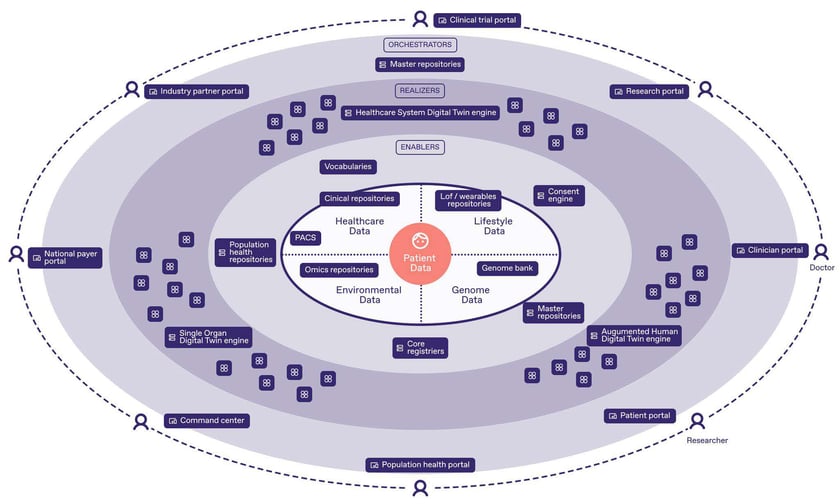
The first layer lays the groundwork for a digitally integrated healthcare system by creating an open, secure, and adaptable digital infrastructure. Referred to as Digital Public Infrastructure for Healthcare (DPIH), this foundation combines open technology standards, networked systems, and robust governance. Drawing from digital government frameworks, DPIH aligns healthcare with other public services, fostering holistic, person-centered care that adapts to the needs of both individuals and communities.44
A resilient DPIH enables seamless integration across regions and sectors, connecting healthcare with social services, education, and labor systems. This modular, open digital infrastructure allows healthcare systems of any scale to adopt and adapt components progressively, fostering connections that support each individual’s health journey. Public and private sector entities play critical roles in co-developing reusable digital tools—such as blockchain-inspired technology, data-sharing protocols, and secure digital identity systems—to streamline and safeguard service interactions. Estonia’s digital identity model serves as a benchmark, allowing citizens secure access to a range of public services, including healthcare, and facilitating data flow across domains.45
To build public trust, DPIH requires strong governance that enforces transparency and accountability. A governing body should oversee compliance, certification, and regular audits of security practices to ensure that data integrity is preserved at every level. With security embedded throughout the digital architecture, this infrastructure creates a trustworthy foundation for healthcare systems to expand and innovate.
02.
Standardizing healthcare knowledge exchange
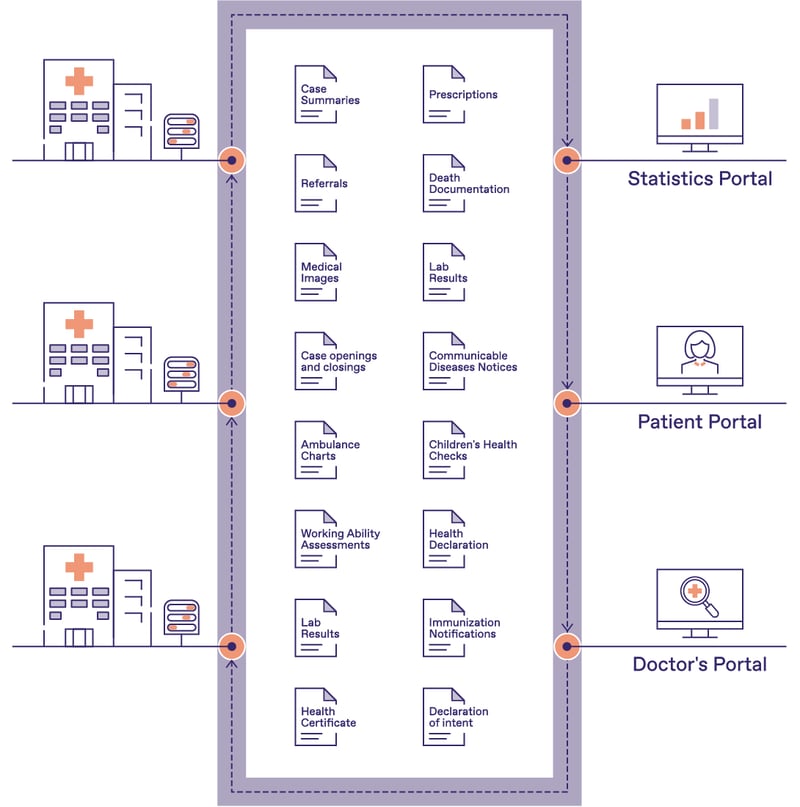
With the DPIH foundation established, the next layer focuses on ensuring health information can move freely and securely across the system, enabling seamless knowledge exchange across interconnected healthcare services. This involves making clinical data available and accessible to authorized providers and institutions, ensuring that healthcare professionals have the information they need to deliver integrated, patient-centered care. Data exchange mechanisms should prioritize high-value information first, such as medication records, diagnostic results, and case summaries, before expanding to more complex datasets like genomics and social determinants of health.
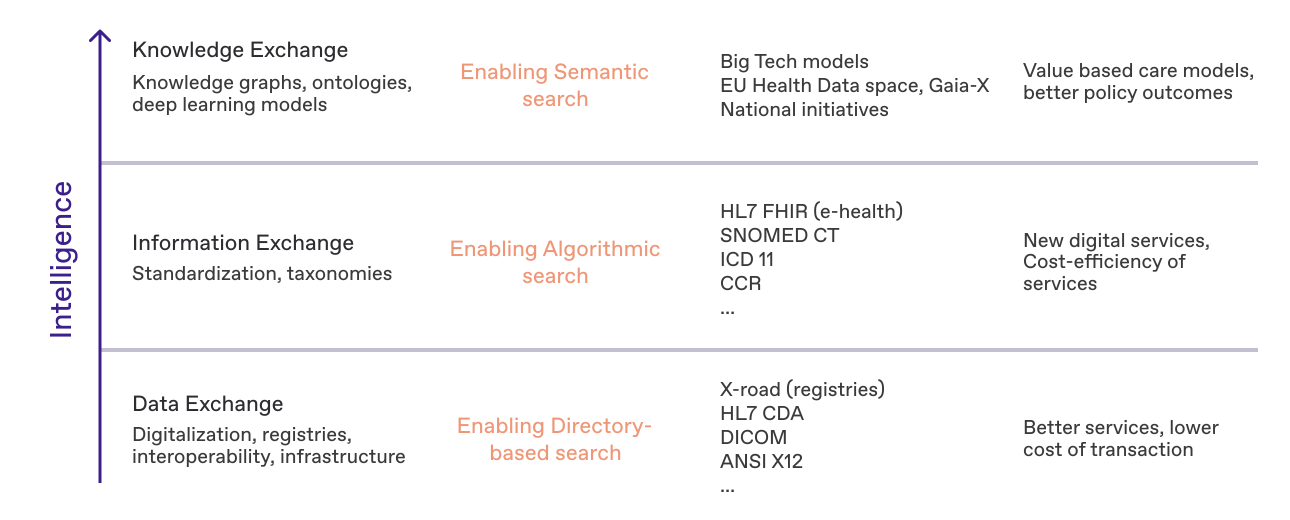
To maintain security and compliance, this layer requires a neutral interoperability framework that standardizes data transfer while preserving privacy. A neutral interoperability layer acts as a buffer, enforcing separation between data access and usage while leaving an auditable trace of every interaction. Estonia’s public data tracker exemplifies this principle, allowing residents to monitor how their data is accessed and used, reinforcing public trust in the system.
Strong governance is crucial for effective knowledge exchange. Governments actively define policies and standards, and manage data-sharing frameworks that align with regulatory requirements. The UK’s proposed Regulatory Innovation Office (RIO) serves as a model of best practice, illustrating how the government can facilitate data-sharing while maintaining security and enabling the integration of transformative technologies.46
To sustain an effective data exchange system, healthcare systems must cultivate a skilled workforce to maintain and advance digital health infrastructure. Governments can support digital health education programs, expert exchanges, and ongoing skill-building initiatives, ensuring that healthcare organizations retain the local expertise necessary for resilient data exchange.
03.
Creating services for efficiency and productivity
With the foundational infrastructure and data exchange mechanisms established, healthcare systems can begin to implement high-impact digital services. These “quick win” solutions address pressing needs and deliver immediate efficiency gains, enhancing productivity and patient experience. By focusing on scalable services that target high-demand areas, healthcare systems can achieve measurable benefits while setting the stage for broader adoption of digital health solutions.
Public sector entities often lead in deploying quick-win services, particularly those that lack direct financial incentives but offer system-wide benefits. For example, Estonia’s national health booking system allows patients to select providers at a national scale, enhancing patient choice and minimizing inefficiencies.47 Other scalable services include e-prescriptions, which streamline medication management and reduce prescription errors, and digital emergency systems that enable paramedics to communicate real-time patient information to hospitals, improving response times in critical cases.
Patient empowerment is another key focus in this layer. Digital health tools that support selfmanagement, such as national patient portals and digital triage systems, enable individuals to take an active role in their care. These services not only improve health outcomes but also contribute to a more sustainable healthcare system by promoting preventive care and reducing unnecessary visits.
Additionally, governance-focused digital tools, such as national health dashboards and clinical registries, provide valuable insights for policymakers, supporting data-driven decisions that enhance system resilience and efficiency. Predictive analytics can forecast future healthcare needs, allowing systems to allocate resources proactively and prepare for potential challenges like disease outbreaks.
Services targeting healthcare provision
Services empowering individuals in healthcare
04.
Driving personalized, proactive health outcomes
By integrating digital public infrastructure with person-centered data governance, healthcare systems foster an environment that supports proactive, personalized care. This shift from reactive, episodic treatment to continuous, preventative care brings significant benefits, including greater sustainability, cost-effectiveness, and innovation. New digital health services and applications can be developed to address high-priority needs, improve patient outcomes, and enable value-based care across the healthcare landscape.
Digital health services like virtual care, chronic illness management, and remote monitoring empower patients to access care from home, reducing hospital admissions and optimizing resource allocation. Personalized health insights and digital therapeutics enhance patient engagement, enabling individuals to make informed choices and proactively manage their health. Public-private partnerships play a vital role, combining public oversight with private sector innovation to develop and scale technologies such as health apps, digital therapeutics, and remote monitoring tools. Governments can incentivize these advancements through grants, tax benefits, and funding opportunities, creating an environment where both established providers and new entrants can thrive.
Key innovations and their impact
Virtual and hybrid care models.
The digital healthcare ecosystem enables seamless access to virtual and hybrid care, ensuring a secure data flow readily accessible to patients and providers. This connectivity allows patients to receive care at home, reducing unnecessary hospital visits and enhancing resource allocation. With a robust, interoperable digital framework, healthcare providers can ensure continuity of care, improving convenience and outcomes for patients managing chronic conditions.
Personalized medicine and genomics.
Healthcare systems can securely integrate genomic data into everyday medical practice, allowing personalized medicine to adapt to individual needs. Large biobanks and genetic data repositories enable the analysis of genetic risks, while consent management systems empower individuals to control their genetic information. Integrated with national health records, this infrastructure supports early detection of conditions and tailored treatments, fostering trust in data handling and enabling proactive, data-driven healthcare for long-term wellness.
Digital therapeutics and behavior management.
Integrating DPI with person-centered governance in digital therapeutics ensures transparent and secure data management, allowing individuals to access personalized mental and behavioral health therapies. Through tailored cognitive-behavioral treatments and continuous monitoring, this infrastructure supports proactive management of conditions like anxiety and depression, offering patients a holistic approach to mental health with confidence in their data security.
Streamlined health navigation services.
By connecting disparate healthcare entities and facilitating data flow across providers, insurers, and stakeholders, DPI simplifies complex processes like referrals, prescriptions, and follow-up appointments. Patients retain control over their health data, allowing them to move effortlessly between services while keeping their information secure. This interconnected system enhances patient experience and reduces administrative burdens across the healthcare ecosystem.
Health data repositories for research.
The broader healthcare ecosystem, including academia and R&D organizations, is empowered to create secure, accessible health data repositories that respect patient autonomy and privacy. Individuals can contribute deidentified data for research, advancing medical discoveries while retaining control over their personal information. This framework fosters ethically driven research in preventive health and personalized medicine, accelerating innovation while maintaining trust in the healthcare system.
In closing we want to bring the vision of personal healthcare system to life, one that is resilient, efficient, and deeply responsive to individual needs. Through real-world applications, we demonstrate how a digital ecosystem makes proactive, personalized care a reality, supporting individuals at every life stage and adapting to their evolving needs long into the future.
This chapter showcases scalable solutions that address high-priority needs, drive continuous improvement, and build a responsive healthcare ecosystem. We’ve structured this section around four characteristic features—Personalization, Accessibility, Proactiveness, and Transparency— that are not looking to provide a new value model for personalized care, but rather highlight practical features, that when combined, ensure that services are designed to meet the practical needs of both patients and providers. Each example in this section illustrates the power of digital healthcare to empower patients, enhance care coordination, and establish a foundation for sustainable, proactive care, demonstrating that effective healthcare extends beyond rigid frameworks to address real-world challenges directly.
Personalization
Personalized digital services provide simplicity and transparency, minimizing the communication burden between clinicians and patients. By meeting users’ needs based on life events rather than health system complexity, human-centric services maximize the use of available data, reduce reliance on navigating complex systems, and allow clinicians to focus on patient care rather than bureaucracy. These solutions bring healthcare to patients, remembering that high-tech services should not expect users to be tech-savvy.
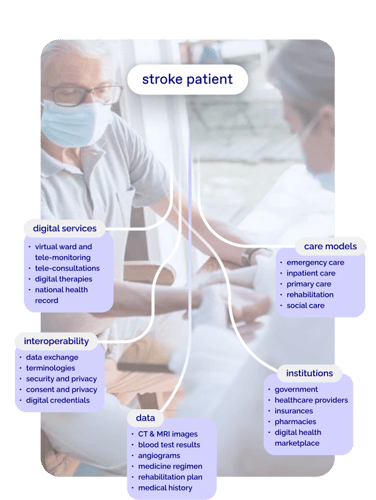
Example: Seamless Recovery for Stroke Patients
After a severe stroke, a patient requires services from multiple healthcare and social support levels. By integrating digital infrastructure, care pathways are seamlessly connected. Primary healthcare, physiotherapy, and social care services are automatically offered based on demographic data, eliminating the need for patients to seek out specific facilities. A collaborative care team manages the patient’s journey within a shared system, providing a clear view of treatment progress.
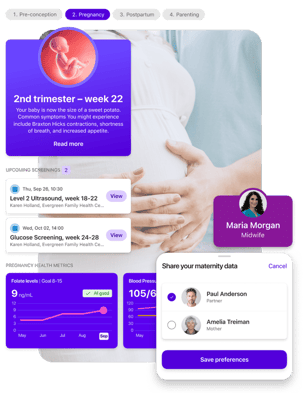
Example: Family Planning Journey
A couple accesses comprehensive family planning information through national channels organized by life event. This includes administrative, medical, and social benefit information accessible by both partners. Notifications for timely administrative actions, such as notifying an employer or selecting a birth provider, are automated and interactive. After birth, essential actions like registering the baby’s name can be completed through the couple’s preferred digital or inperson channels.
Accessibility
Digital health services are accessible to all intended users via their preferred channels without sacrificing quality. By removing physical barriers, these tools ensure that health services reach people where they are. For healthcare providers, intuitive digital tools improve cross-sector collaboration and make services more usable, even for those unfamiliar with advanced technology.
While digital tools are designed to be widely accessible, barriers such as digital literacy and technology availability must be addressed to ensure equitable access. Strategies to overcome these challenges may include digital literacy programs, simplified user interfaces, and flexible service delivery options, allowing individuals of all backgrounds and abilities to engage with digital healthcare effectively. Additionally, providing access points in community locations, such as libraries or local health centers, can help bridge technology gaps, particularly for underserved populations. By accommodating diverse user needs, healthcare systems can make digital healthcare inclusive, reducing disparities and empowering patients to participate fully in their care.
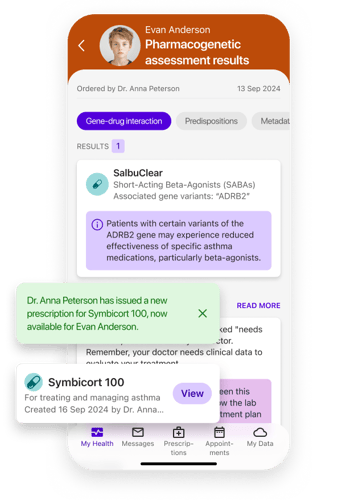
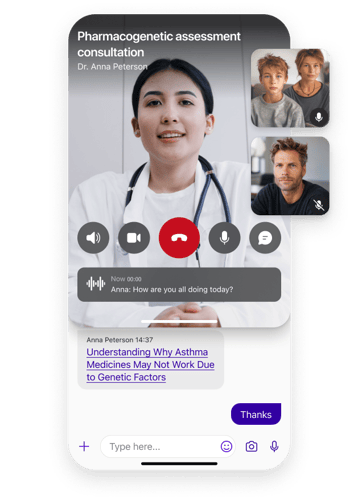
Example: Medication Management Made Safe and Easy
A digital medication plan offers doctors a comprehensive view of their patient’s medications. Real-time decision support helps identify drug interactions and assess pharmacogenomic factors, ensuring safer prescriptions. Patients can use digital credentials for medication access without further interaction, and their updated medication plan remains accessible online for adherence support.
Example: Location-Agnostic Services
Patients can receive healthcare services remotely, reducing the need for unnecessary travel. For example, patients can submit samples locally, access results online, and consult with doctors via telehealth. Interdisciplinary teams can collaborate through e-consultation tools, enabling efficient care delivery without requiring patients to attend multiple appointments.
Proactiveness
Proactive digital health services anticipate needs and often operate invisibly, creating a shift toward preventive care. With the patient’s consent, these services initiate actions and communications, streamlining processes to enhance both user satisfaction and system efficiency. The result is a healthcare experience that frees individuals’ time for meaningful engagement with their health.
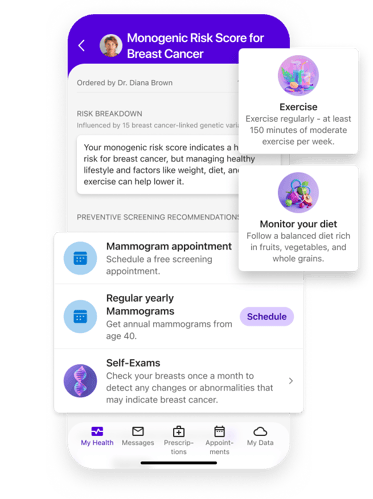
Example: Personalized Prevention for Breast Cancer
Women can consent to genetic screening, allowing for automatic breast cancer risk assessments. When risks are detected, patients are proactively enrolled in screening programs regardless of age, receiving actionable information and a referral. This approach integrates preventive care into the routine healthcare experience, leveraging personalized risk data.
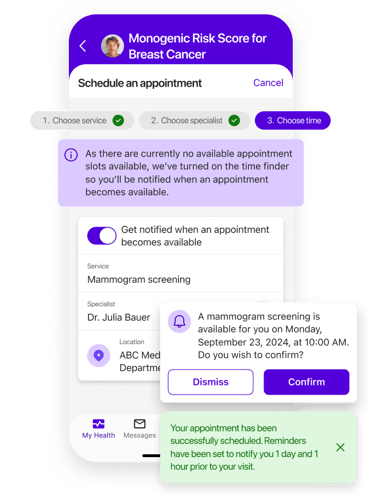
Example: Time-Efficient Appointment Access
Patients using a national e-booking system who encounter unavailable appointment times can opt into a “time-finder” function, which notifies them when new slots open. Patients have time to accept, or decline offers, eliminating the need for constant checking and reducing clinic no-shows.
Transparency
Trust and reliability are essential for effective healthcare and better health outcomes. Trust in healthcare relies on ethical, transparent handling of patients’ information and needs. In digital healthcare, services explain to individuals how information is used in decision-making and what obligations apply, reinforcing transparency and security.
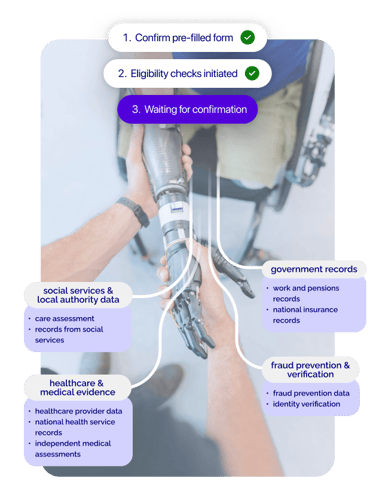
Example: Comprehensible Support Measures
For vulnerable patients, such as those applying for disability allowance, processes are straightforward and clearly outlined. Patients know what steps are required and how their information will be used, empowering them to retain control of their data throughout the process.
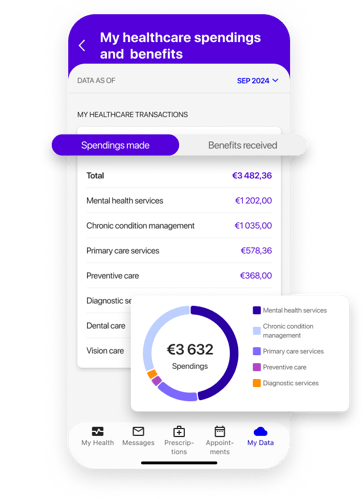
Example: Transparency in Care Costs
Through a national portal, patients can view the costs of services covered by national insurance. This transparency fosters a sense of ownership and social solidarity, reducing the risk of fraud by making billing information accessible to all citizens.
Learn more about how to build a human-centered government, provide a better public service experience and efficient public administration.