Search
Explore digital transformation resources.
Uncover insights, best practises and case studies.

Search
Explore digital transformation resources.
Uncover insights, best practises and case studies.

Governments are often told it will take 10 years to digitalize their services for a citizen-centric state. The Sultanate of Oman will do it in half that time. The secret? Stand on the shoulders of those who’ve come before, and then take it further.
Service
Industry
On a morning in Muscat, a citizen opens the new government unified platform (Gov.om) mobile app, not to hunt through dozens of ministry websites but simply to ask the GenAI-enabled Digital Assistant where to renew a license. In seconds, the assistant points them to the correct service, explains the steps and brings everything into a single, familiar interface.
Across the city, a government official logs into the Gov.om Operations Dashboard. Instead of guessing which services need attention, they see real-time data: which services are most frequently used, where delays are forming and which demographics are underserved. For the first time, decision-making is grounded in a complete, cross-government picture.
These are the everyday moments Gov.om makes possible, not by reinventing services overnight but by unifying standards, centralizing access and giving the government the visibility it has never had before.
And now, with the launch of Oman’s first GenAI-enabled Digital Assistant, guiding users through thousands of government services in Arabic and English, the Sultanate has added a new layer of intelligence to its unified government experience.
Oman has already made major strides in digital government, earning global recognition for initiatives like the Open Source Software (OSS) Policy and strengthening its foundational digital infrastructure. Yet its ambition extends further: to deliver seamless, world-class services to every citizen and resident.
Despite this progress, Oman’s decentralized model once had hundreds of digital platforms operating in silos, with limited integration and inconsistent standards. To unlock the next level of efficiency and citizen experience, the government sought to unify and accelerate its digital ecosystem, moving from strong foundations to bold innovation.
Its Oman Vision 2040 advocated “One Government,” a partnership between the government, private sector, civil society and citizens. His Majesty Haitham Bin Tarik required a digital backbone that could empower the Omani people to release their full potential. And progress would be measured by using the Online Service Index, where Oman currently ranks 41st globally (up from 58th in 2022).
But the ambition was not simply to climb rankings. It was to lead the region in smart government and digital accessibility, shifting from fragmented online services to a unified, life-event–driven platform.
Working with the biggest and most conservative companies was, at least at one time, considered a safe approach. But today, in the digital age, the conservative approach generally means a ten-year road to a digital infrastructure.
The Sultanate, with its digitally progressive mindset, knew never to limit itself with the most conservative approach. Their 2017 “Invest Easy” project , developed by Nortal, had already resulted in an improvement for Oman in the World Bank’s Ease of Doing Business index—from 159th place to 32nd place. They’d already taken the first steps toward modern digital infrastructure, and already had a reputation in the Middle East that was similar to Estonia’s image as an e-pioneer in Europe.
Though speed was not its primary goal, the Sultanate knew citizen services truly designed around users' needs would elevate its position on e-indices in less than ten years. And how fast did Nortal think they could do it together?
(Five years to an ultimate personal government.)
The Oman 2040 Vision’s “One Government” foresaw a single digital gateway, also termed a single front door or government unified platform, based on similar solutions in Estonia and in other digitally advanced nations.
Oman's long-term roadmap envisioned a four-phase transition to an ultimate sustainable and adaptable "personal government." Phase one was called "digital by default" the establishment of new central standards and principles. Phase two, "digital by design,” called for a data-driven, open "government-as-platform." Phase three, a "user-driven and proactive government," ultimately giving way to Personal Government, a fully automatic, life-event-based services including foundational reforms including enabling legislation.
Creating a single digital gateway was still a mammoth project, but the joint team, bringing together government ministries and technology partners, approached the challenge by cutting the mammoth into bite-sized pieces that would each last six months to a year until the MVP was ready. The philosophy: Each piece must deliver visible value to at least part of the stakeholders—sometimes to citizens, sometimes to government—but someone would always be seeing a return on investment. In this fashion, a buy-in is always happening somewhere, momentum increases, and support grows all around.
From its experience in digitalization, the team employed four key principles in everything it did:
Avoid repetition and ensure that citizens, institutions, and companies only have to provide certain standard information to the authorities and administrations once.
Use a human-centric approach to provided services with an experience that is intuitive, relevant and personal.
It’s a future-facing mindset with a robust foundation that enables easy service creation, integration, and management.
A structured, multi-channel customer listening model ensures services are continuously enhanced in collaboration with the general public and government entities, evolving based on real user feedback.
In phase one, 10 government entities worked together to deliver the first version of Gov.om, integrating services across ministries and public service channels. A centralized operations dashboard provides a unified interface providing real-time status updates for services. These dashboards also enabled decision-makers to understand the data around applications submitted, SLAs maintained and overall organizational performance, serving as a foundation for data-driven decision-making across government.
In the first five months of the project, Oman was able to scale 10 times faster than countries at a similar maturity stage, attracting 290,000 active users to Gov.om, achieving 83 percent overall satisfaction. Oman’s UX exceeded the OECD's "user satisfaction with public services" benchmark of 66 percent and Gov.om received user rating of 4.3 out of five points. Over the course of 30 months, the modern unified government platform delivered a national design system, more than 88 integrated services, plus Gov.om mobile app and GenAI-enabled Digital Assistant.
The cost of delivering new digital services is expected to be 32 percent lower than the industry norm, thanks to the platform's built-in enablers and accelerators, and its return on investment is projected to reach 4.6, exceeding global benchmarks. As early evidence of long-term value, Oman has already achieved 80 percent user retention, while many nations struggle to exceed 50 percent for unified portals.
The team’s work began in the third quarter of 2023. The five-year journey is a three-phase process, with phase one completed in February 2025.
The platform was built to evolve. Through initiatives such as GovThon, the Ministry invites Omani youth, innovators and entrepreneurs to test new ideas directly on the unified platform, from predictive services to accessibility improvements.
Oman now has a state-of-the-art architecture that enables scalable growth for its service providers, plus a compelling brand vision that works seamlessly both on- and offline. By 2029, Omani citizens will culminate in seamless and personalized services, what Nortal refers to as “personal government.”
And Oman is well positioned to achieve its broader goals of becoming the friendliest business climate in the world, offering a seamless cultural travel experience and removing all barriers to successful investing.
Oman launched a modern unified government platform over the course of 30 months, delivering a national design system, more than 88 integrated services, a mobile app and GenAI-enabled Digital Assistant.
4.6x
Projected ROI with lower investments and fewer resources than global benchmarks such UAE or KSA.
1.6Y
The time Oman needed to deliver what typically takes 5–6 years elsewhere: an integrated, unified government portal.
10x
Faster adoption relative to population and timeframe than nations at a similar stage of digital maturity.
290K
Citizens onboarded in the first five months, with 83% satisfaction, validating strong citizen demand and digital-first behaviour.
32%
Lower delivery costs than industry norms, enabled by built-in platform enablers and accelerators.
1st
National BI dashboard giving Oman real-time insight into service performance and eliminating hundreds of hours of manual reporting.
1
Inclusion & sustainability: Strong local capacity-building by involving Omani SMEs, ensuring long-term ecosystem resilience.
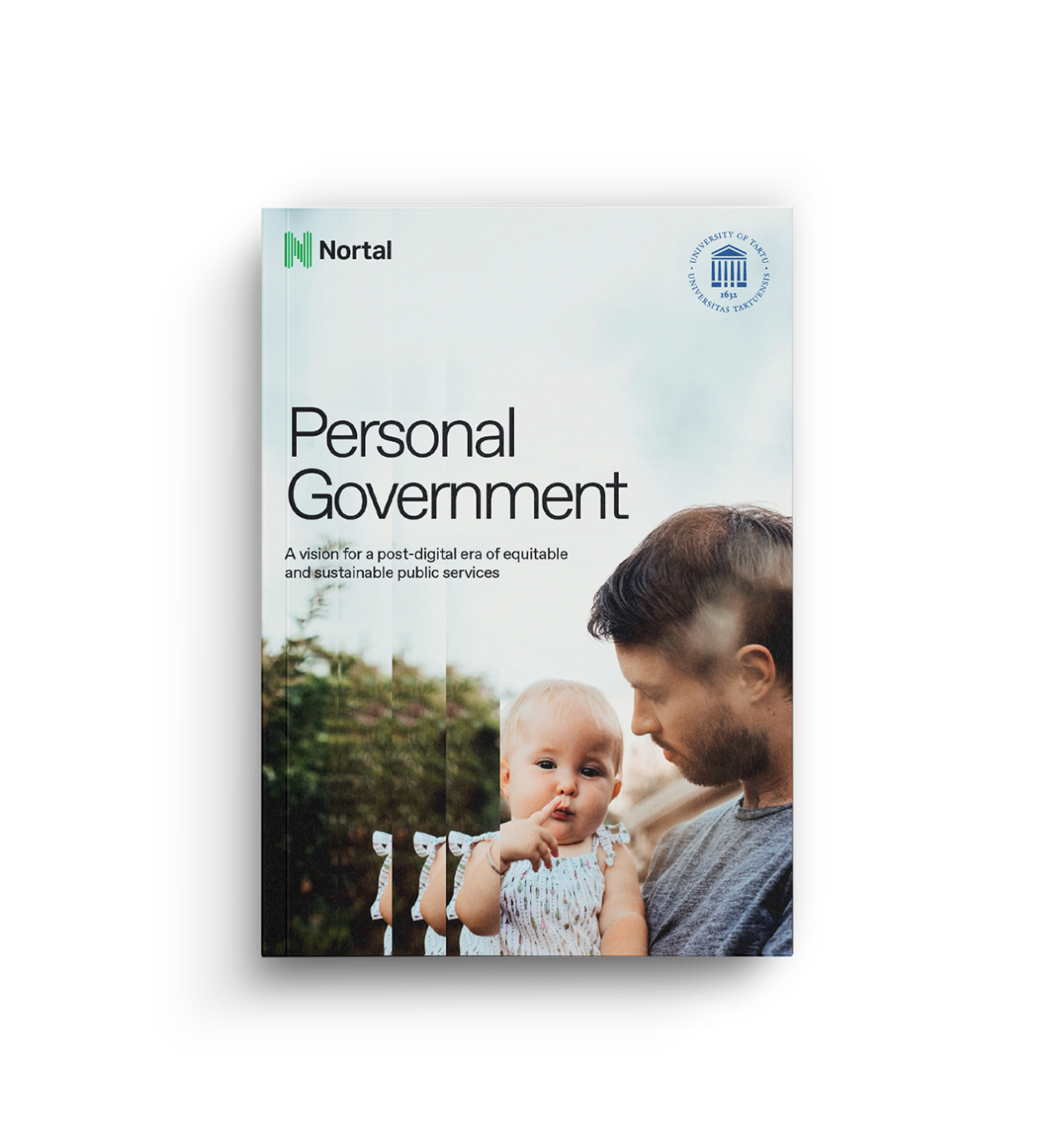
Learn how today’s social concerns and global trends force governments to rethink how to offer public services in the future.
Let us offer you a new perspective.