Search
Explore digital transformation resources.
Uncover insights, best practises and case studies.

Search
Explore digital transformation resources.
Uncover insights, best practises and case studies.

A comprehensive guide to unlocking the power of data to maximize value and ensure compliance
Data governance is a framework for managing the availability, usability, integrity, and security of data in an organization. It involves establishing policies, procedures, and standards to ensure data is accurate, consistent, and accessible. Data governance is the backbone of data management, aligning data practices with business objectives and regulatory requirements. The interplay between all those elements ensures that organizations can benefit from their data.

Ensures data is fit for its intended use

Assigns responsibility for data assets

Protects sensitive information

Ensures adherence to regulations and standards
With increasing digitalization, the amount of produced data is growing rapidly. According to Statista, approximately 147 billion terabytes of data will be created in 2024. This surge in data creation has led organizations to accumulate vast amounts of unused data, which holds considerable potential. If used wisely, data can become the main driver of business, offering market insights and robust risk management, enabling innovation and informed decision-making, thus providing companies with a serious competitive advantage.
However, data also presents potential risks. Poor data management can lead to significant issues, including unauthorized access, data breaches, privacy concerns, and data misuse, which can result in reputational harm and legal liabilities. Through intelligent data analytics, artificial intelligence, and a suitable infrastructure, processes can be monitored and optimized, novel insights can be gained, and new business models can evolve.
To reap the benefits and avoid the risks, effective data governance is essential. It helps break down existing data silos, fostering better collaboration and data sharing across teams, leading to a more integrated and efficient process. Additionally, it improves data quality, ensures compliance with legal and regulatory requirements, mitigates risks related to data breaches or inaccuracies, and builds trust in the data relied upon by the organization.
Comprehensive data management can unlock several benefits for an organization:

Effective data governance standardizes, (partially) automates and checks data processes to improve the quality of data sets and ensure that information is up-to-date, complete, and correct. It also enables data processes to be carried out efficiently and frees up resources previously tied up in redundant, non-automated, non-standardized, or outdated processes.
Data governance provides a clear framework of data-driven collaboration across one’s organization or even more extensive networks (e.g. governmental data spaces) with defined roles, responsibilities, and access management to data sets to facilitate the exchange and collaboration for data-based analyses.
Data governance ensures that only authorized users defined by their role in the organization have access to the appropriate data sets. It also helps mitigate cybersecurity risks by classifying data based on its sensitivity.
Compliance with data governance ensures a valid single harmonized source of truth for analyses, prevents the use of data of varying quality or timeliness, and strengthens the fluency of the organization’s specialist departments both internally and externally.
Data governance helps to implement strategic corporate goals and has a direct influence on the organization achieving its business goals by offering deep and objective insights based on the organization’s actual data. This increases companies’ scope for action and speed of reaction, especially in a volatile market.
Comprehensive data management can unlock several benefits for an organization:
Effective data governance standardizes, (partially) automates and checks data processes to improve the quality of data sets and ensure that information is up-to-date, complete, and correct. It also enables data processes to be carried out efficiently and frees up resources previously tied up in redundant, non-automated, non-standardized, or outdated processes.
Data governance provides a clear framework of data-driven collaboration across one’s organization or even more extensive networks (e.g. governmental data spaces) with defined roles, responsibilities, and access management to data sets to facilitate the exchange and collaboration for data-based analyses.
Data governance ensures that only authorized users defined by their role in the organization have access to the appropriate data sets. It also helps mitigate cybersecurity risks by classifying data based on its sensitivity.
Compliance with data governance ensures a valid single harmonized source of truth for analyses, prevents the use of data of varying quality or timeliness, and strengthens the fluency of the organization’s specialist departments both internally and externally.
Data governance helps to implement strategic corporate goals and has a direct influence on the organization achieving its business goals by offering deep and objective insights based on the organization’s actual data. This increases companies’ scope for action and speed of reaction, especially in a volatile market.
Effective data governance standardizes, (partially) automates and checks data processes to improve the quality of data sets and ensure that information is up-to-date, complete, and correct. It also enables data processes to be carried out efficiently and frees up resources previously tied up in redundant, non-automated, non-standardized, or outdated processes.
Data governance provides a clear framework of data-driven collaboration across one’s organization or even more extensive networks (e.g. governmental data spaces) with defined roles, responsibilities, and access management to data sets to facilitate the exchange and collaboration for data-based analyses.
Data governance ensures that only authorized users defined by their role in the organization have access to the appropriate data sets. It also helps mitigate cybersecurity risks by classifying data based on its sensitivity.
Compliance with data governance ensures a valid single harmonized source of truth for analyses, prevents the use of data of varying quality or timeliness, and strengthens the fluency of the organization’s specialist departments both internally and externally.
Data governance helps to implement strategic corporate goals and has a direct influence on the organization achieving its business goals by offering deep and objective insights based on the organization’s actual data. This increases companies’ scope for action and speed of reaction, especially in a volatile market.
The exact structure of a data governance framework is individual to each organization because it consists of two major levels that are closely linked: the organizational level and the process level. The organizational level focuses on setting up the administrative structure for data governance, whereas the process level aims to execute data governance procedures and set standards. Their specific design depends on the data governance framework and existing data-related conditions within the organization. Individual organizations’ conditions, e.g., the strategic, organizational, legal and social, and technical aspects, influence the development of an effective data governance framework.

How to establish solid data governance
The exact structure of a data governance framework is individual to each organization because it consists of two major levels that are closely linked: the organizational level and the process level. The organizational level focuses on setting up the administrative structure for data governance, whereas the process level aims to execute data governance procedures and set standards. Their specific design depends on the data governance framework and existing data-related conditions within the organization. Individual organizations’ conditions, e.g., the strategic, organizational, legal and social, and technical aspects, influence the development of an effective data governance framework (see Fig. 1).

At the organizational level, the data governance framework defines the roles, responsibilities, communication channels, and decision rights (see Fig. 1). Within this level, data governance roles and associated responsibilities are pivotal. Typically, up to six distinct roles exist, and they are hierarchically structured on four distinct levels (see Fig. 2).
At the organizational level, the data governance framework defines the roles, responsibilities, communication channels, and decision rights (see Fig. 1). Within this level, data governance roles and associated responsibilities are pivotal. Typically, up to six distinct roles exist, and they are hierarchically structured on four distinct levels (see Fig. 2).
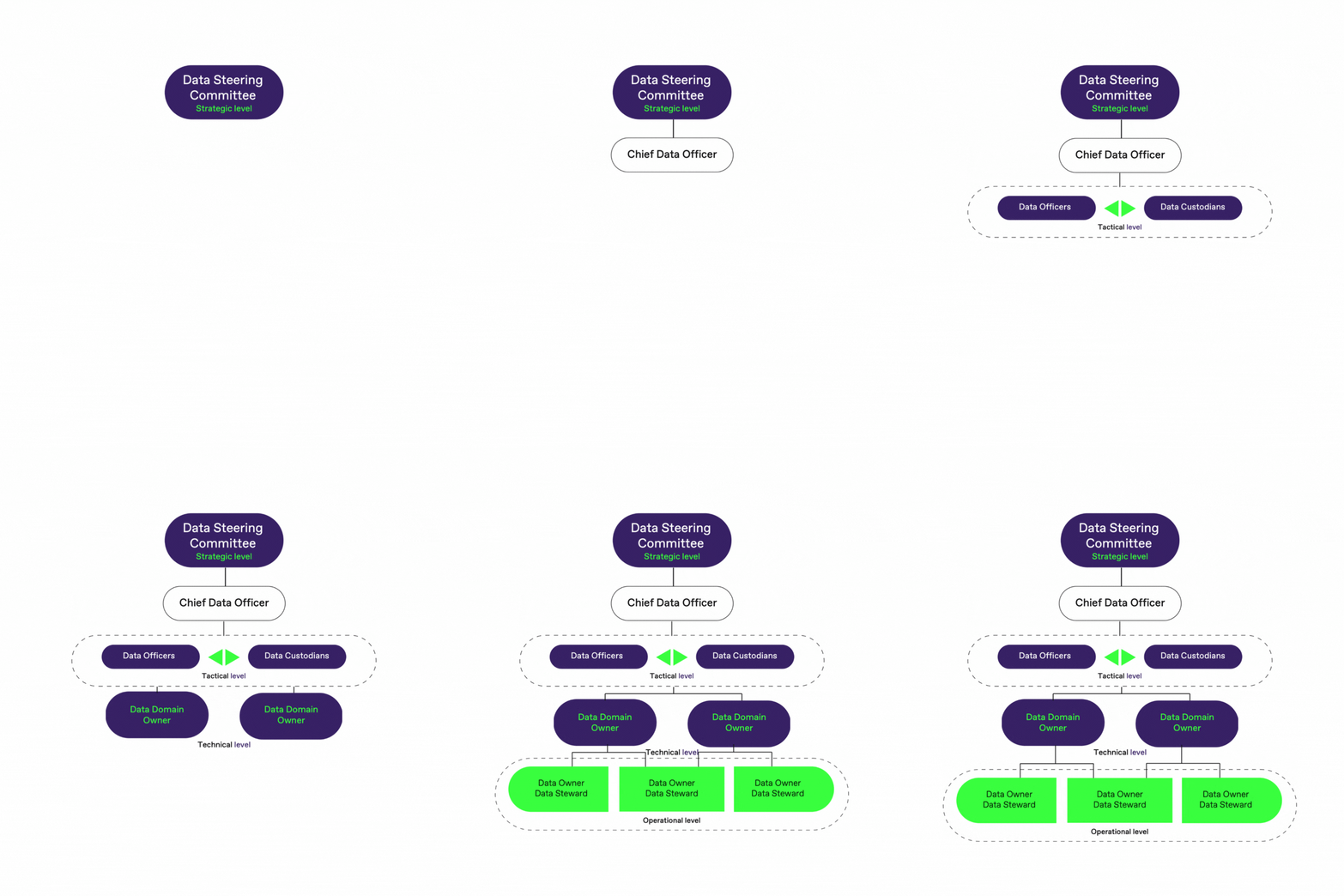
At the organizational level, the data governance framework defines the roles, responsibilities, communication channels, and decision rights. Within this level, data governance roles and associated responsibilities are pivotal. Typically, up to six distinct roles exist, and they are hierarchically structured on four distinct levels.
At the highest, strategical level, a Data Steering Committee – consisting of experienced technical experts, IT experts, and decision-makers – initially defines the overarching objectives and data governance policies.
While the Data Steering Committee takes on an advisory role, the Chief Data Officer (CDO), who reports to the committee, has a more hands-on executive role, operating at the tactical level. The CDO leads the data governance initiatives, develops data strategies, and ensures the implementation of data governance policies. The CDO acts as a bridge between the committee, Data Officers, and Custodians. The role of a CDO is optional and might only exist in larger organizations.
In contrast to the CDO, Data Officers focus on data quality, compliance, and governance policy implementation. Data Officers are responsible for implementing and complying with the objectives, principles, and policies of the Data Steering Committee.
They often work in parallel with Data Officers and are responsible for the IT infrastructure and implementing the agreed data governance policies related to data storage and management, access control, security, etc.
At the technical level, Data Domain Owners oversee specific areas of data records, processes, and analyses within their data domain and thus represent a higher level of authority at the immediate operational level. They have the authority to make decisions about data access, usage, and retention within their domain.
At the operational level, this role is responsible for the product’s required data objects. They manage access, make decisions, and secure the data objects.
At the operational level, this role requires advanced technical expertise and fulfills the necessary transformations regarding data preparation, quality, and compliance with regulations. Data Stewards do not have decision-making power over the data sets; however, they are responsible for classifying the data sets based on their sensitivity, value, and purpose, thus providing input regarding data lifecycle management.
At the highest, strategical level, a Data Steering Committee – consisting of experienced technical experts, IT experts, and decision-makers – initially defines the overarching objectives and data governance policies.
While the steering committee takes on an advisory role, the Chief Data Officer (CDO), who reports to the committee, has a more hands-on executive role, operating at the tactical level. The CDO leads the data governance initiatives, develops data strategies, and ensures the implementation of data governance policies. The CDO acts as a bridge between the committee, Data Officers, and Custodians. The role of a CDO is optional and might only exist in larger organizations.
In contrast to the CDO, Data Officers focus on data quality, compliance, and governance policy implementation. Data Officers are responsible for implementing and complying with the objectives, principles, and policies of the Data Steering Committee.
They often work in parallel with Data Officers and are responsible for the IT infrastructure and implementing the agreed data governance policies related to data storage and management, access control, security, etc.
At the technical level, Data Domain Owners oversee specific areas of data records, processes, and analyses within their data domain and thus represent a higher level of authority at the immediate operational level. They have the authority to make decisions about data access, usage, and retention within their domain.
At the operational level, this role is responsible for the product’s required data objects. They manage access, make decisions, and secure the data objects.
At the operational level, this role requires advanced technical expertise and fulfills the necessary transformations regarding data preparation, quality, and compliance with regulations. Data Stewards do not have decision-making power over the data sets; however, they are responsible for classifying the data sets based on their sensitivity, value, and purpose, thus providing input regarding data lifecycle management.
At the organizational level, the data governance framework defines the roles, responsibilities, communication channels, and decision rights (see Fig. 1). Within this level, data governance roles and associated responsibilities are pivotal. Typically, up to six distinct roles exist, and they are hierarchically structured on four distinct levels (see Fig. 2).
At the highest, strategical level, a Data Steering Committee – consisting of experienced technical experts, IT experts, and decision-makers – initially defines the overarching objectives and data governance policies.
While the steering committee takes on an advisory role, the Chief Data Officer (CDO), who reports to the committee, has a more hands-on executive role, operating at the tactical level. The CDO leads the data governance initiatives, develops data strategies, and ensures the implementation of data governance policies. The CDO acts as a bridge between the committee, Data Officers, and Custodians. The role of a CDO is optional and might only exist in larger organizations.
In contrast to the CDO, Data Officers focus on data quality, compliance, and governance policy implementation. Data Officers are responsible for implementing and complying with the objectives, principles, and policies of the Data Steering Committee.
They often work in parallel with Data officers and are responsible for the IT infrastructure and implementing the agreed data governance policies related to data storage and management, access control, security, etc.
At the technical level, Data Domain Owners oversee specific areas of data records, processes, and analyses within their data domain and thus represent a higher level of authority at the immediate operational level. They have the authority to make decisions about data access, usage, and retention within their domain.
This role is responsible for the product’s required data objects. They manage access, make decisions, and secure the data objects.
At the operational level, these roles typically collaborate within a department, team, or on a specific topic.
This role requires advanced technical expertise and fulfills the necessary transformations regarding data preparation, quality, and compliance with regulations. Data Stewards do not have decision-making power over the data sets; however, they are responsible for classifying the data sets based on their sensitivity, value, and purpose, thus providing input regarding data lifecycle management.
At the operational level, these roles typically collaborate within a department, team, or on a specific topic.
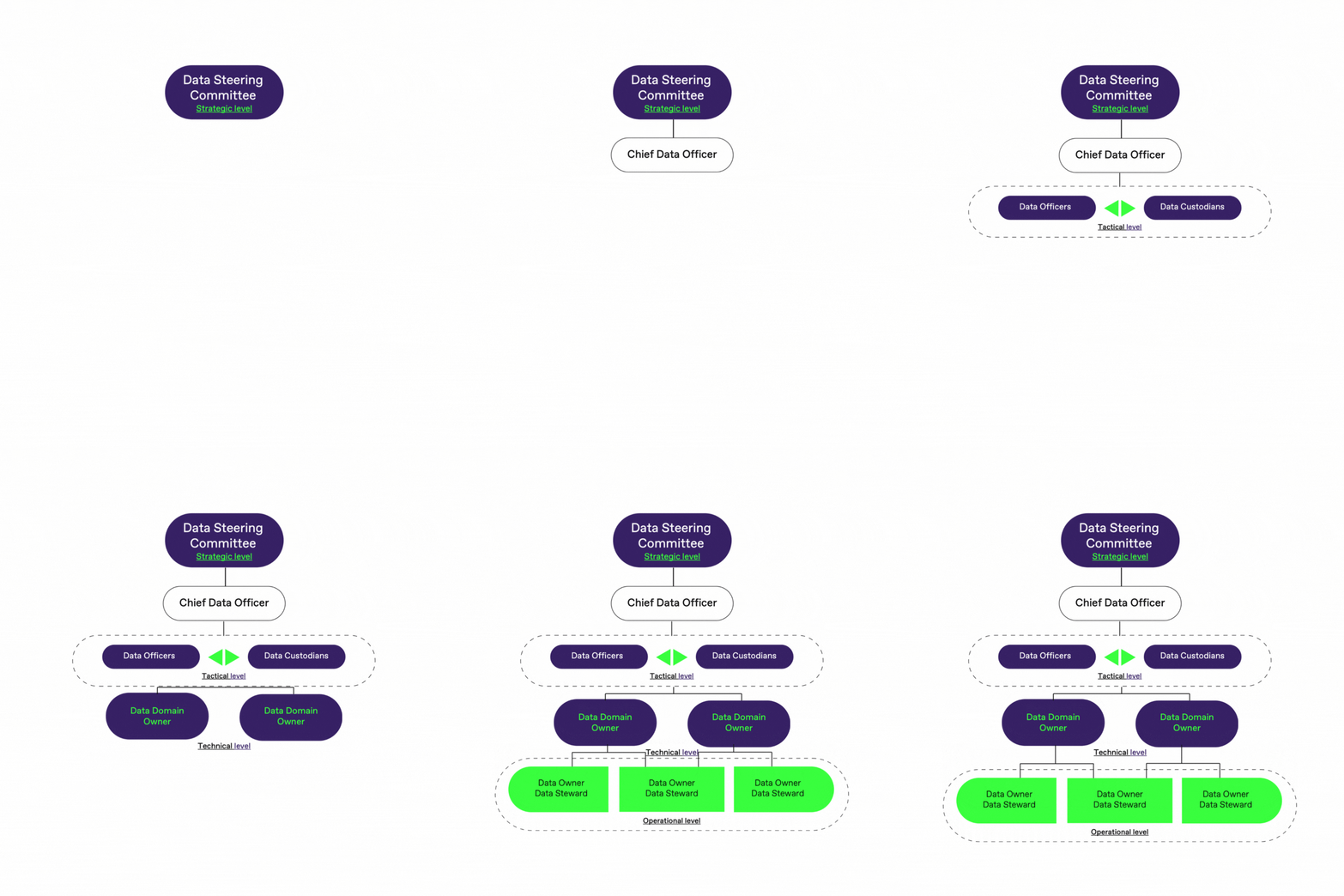
At the highest, strategical level, a Data Steering Committee – consisting of experienced technical experts, IT experts, and decision-makers – initially defines the overarching objectives and data governance policies.
While the steering committee takes on an advisory role, the Chief Data Officer (CDO), who reports to the committee, has a more hands-on executive role, operating at the tactical level. The CDO leads the data governance initiatives, develops data strategies, and ensures the implementation of data governance policies. The CDO acts as a bridge between the committee, Data Officers, and Custodians. The role of a CDO is optional and might only exist in larger organizations.
In contrast to the CDO, Data Officers focus on data quality, compliance, and governance policy implementation. Data Officers are responsible for implementing and complying with the objectives, principles, and policies of the Data Steering Committee.
They often work in parallel with Data officers and are responsible for the IT infrastructure and implementing the agreed data governance policies related to data storage and management, access control, security, etc.
At the highest, strategical level, a Data Steering Committee – consisting of experienced technical experts, IT experts, and decision-makers – initially defines the overarching objectives and data governance policies.
While the steering committee takes on an advisory role, the Chief Data Officer (CDO), who reports to the committee, has a more hands-on executive role, operating at the tactical level. The CDO leads the data governance initiatives, develops data strategies, and ensures the implementation of data governance policies. The CDO acts as a bridge between the committee, Data Officers, and Custodians. The role of a CDO is optional and might only exist in larger organizations.
In contrast to the CDO, Data Officers focus on data quality, compliance, and governance policy implementation. Data Officers are responsible for implementing and complying with the objectives, principles, and policies of the Data Steering Committee.
They often work in parallel with Data officers and are responsible for the IT infrastructure and implementing the agreed data governance policies related to data storage and management, access control, security, etc.
At the technical level, Data Domain Owners oversee specific areas of data records, processes, and analyses within their data domain and thus represent a higher level of authority at the immediate operational level. They have the authority to make decisions about data access, usage, and retention within their domain.
This role is responsible for the product’s required data objects. They manage access, make decisions, and secure the data objects.
At the operational level, these roles typically collaborate within a department, team, or on a specific topic.
This role requires advanced technical expertise and fulfills the necessary transformations regarding data preparation, quality, and compliance with regulations. Data Stewards do not have decision-making power over the data sets; however, they are responsible for classifying the data sets based on their sensitivity, value, and purpose, thus providing input regarding data lifecycle management.
At the operational level, these roles typically collaborate within a department, team, or on a specific topic.
Expert tip:
To ensure the effectiveness of the organizational structure, the implementation of standards and guidelines is crucial. This involves evaluating current and planned data processes across all data lifestyle stages to identify gaps, ensure compliance, and enhance overall data quality and efficiency. This analysis should be based on defined criteria, with clear decision-making and veto rights. Key criteria to consider include data quality, extracting and documenting relevant metadata, documenting data lineage from creation to deletion, and implementing robust data security measures. These measures can maximize the value of the organization’s data assets while mitigating risks and ensuring sustainability.

The implementation of a data governance framework can be summarized in five major steps. Note that introducing a data governance framework is an ongoing process requiring continuous expansion, regular review, and frequent updates of data policies, procedures, and standards.
Expert tip:
A well-maintained data catalog is crucial as it acts as a central repository for data assets, ensuring accuracy, consistency, and accessibility across the organization. Constant expansion, regular review, and updates are essential to maintaining the data catalog as a single source of truth.

The implementation of a data governance framework can be summarized in five major steps (see Fig. 3). Note that introducing a data governance framework is an ongoing process requiring continuous expansion, regular review, and frequent updates of data policies, procedures, and standards.
Expert tip:
A well-maintained Data Catalog is crucial as it acts as a central repository for data assets, ensuring accuracy, consistency, and accessibility across the organization. Constant expansion, regular review, and updates are essential to maintaining the Data Catalog as a single source of truth.
Building data governance is an ongoing process that evolves, prioritizing usability and accessibility. It involves defining individual aspects in sufficient detail while avoiding excessive complexity. This balance allows for focus on essentials and ensures their value from the beginning. Starting with a defined use case helps to build and adapt the framework dynamically instead of constructing a conceptual framework first and then filling it with data. Moreover, the implementation should be measurable by defining KPIs, e.g., data accuracy rate or engagement of Data Stewards.
Well-thought-out data governance is the basis for sustainably efficient data usage and the secure use of AI technologies. It requires a data strategy and a defined roles and rights concept that fits the organization to harness data potential in line with its strategic goals successfully.
If you want to unlock the full potential of your data with a strategic governance approach, consult one of our data governance experts.

Expert tip:
Start small by focusing on one use case at a time instead of creating an overarching framework. Identify relevant data domains, define roles and rights, and document everything in the data catalog. Gradually expand by incorporating more use cases, data domains, and roles.
Building data governance is an ongoing process that evolves, prioritizing usability and accessibility. It involves defining individual aspects in sufficient detail while avoiding excessive complexity. This balance allows for focus on essentials and ensures their value from the beginning. Starting with a defined use case helps to build and adapt the framework dynamically instead of constructing a conceptual framework first and then filling it with data. Moreover, the implementation should be measurable by defining KPIs, e.g., data accuracy rate or engagement of Data Stewards.
Well-thought-out data governance is the basis for sustainably efficient data usage and the secure use of AI technologies. It requires a data strategy and a defined roles and rights concept that fits the organization to harness data potential in line with its strategic goals successfully. If you want to unlock the full potential of your data with a strategic governance approach, consult our Data Governance experts.

Expert tip:
Start small by focusing on one use case at a time instead of creating an overarching framework. Identify relevant data domains, define roles and rights, and document everything in the Data Catalog. Gradually expand by incorporating more use cases, data domains, and roles.
AI is already changing everything, and the pace of change is accelerating fast. It’s leading to a future where data is used to massively increase employee productivity and reduce and eliminate menial and repetitive work. We can help you unlock the full potential of your data.
ICT business continuity policy and disaster recovery plans; Procedures for management of internal- and external crisis communications; Scenarios of cyberattacks.
ICT security awareness programs and resilience trainings; Post ICT-related incident review procedures; Digital resilience strategy effectiveness monitoring.
Incident response communication policies for staff and external stakeholders; Communication plans for incident disclosure.
Roles and responsibilities for different incident types and scenarios; Notification to clients and internal escalation procedures.
Unlock the full potential of your data. Reach out to one of our data governance experts today.
Case study

Nortal's AI solution transformed knowledge management for TalTech, saving 75+ man-hours every month and providing 3X faster access to information.
Article

Real-life case examples reveal how data-driven decisions and innovation can be realized in any industry.
Article

Navigate the uncharted waters of how GenAI can mitigate the risks of poor data quality and cultivate an ecosystem of reliable, enriched data.