Suche
Entdecken Sie Ressourcen rund um die digitale Transformation.
Finden Sie Best Practices, Fallstudien und vieles mehr.

Suche
Entdecken Sie Ressourcen rund um die digitale Transformation.
Finden Sie Best Practices, Fallstudien und vieles mehr.

Weshalb wir Data Governance benötigen und welchen Mehrwert sie liefert
Data Governance ist ein Framework zur Verwaltung der Verfügbarkeit, Nutzbarkeit, Integrität und Sicherheit von Daten in einer Organisation. Es umfasst das Verfassen von Richtlinien, Verfahren und Standards, um sicherzustellen, dass Daten genau, konsistent und zugänglich sind. Data Governance ist das Rückgrat des Datenmanagements, das die Datenpraktiken mit den Geschäftszielen und den gesetzlichen Anforderungen in Einklang bringt. Das Zusammenspiel all dieser Elemente gewährleistet, dass Organisationen von ihren Daten profitieren.

Stellt sicher, dass Daten für ihre Verwendung geeignet sind

Weist Rollen und Rechte den jeweiligen Datenbeständen zu

Schützt sensible Informationen

Gewährleistet, dass Vorschriften und Standards eingehalten werden
Die Menge der produzierten Daten wächst aktuell rasant mit zunehmender Digitalisierung. Laut Statista werden im Jahr 2024 etwa 147 Milliarden Terabyte an Daten erstellt. Dieser rasante Anstieg führt dazu, dass Unternehmen riesige Mengen ungenutzter Daten ansammeln, die enormes Potenzial bieten. Wenn diese Daten klug genutzt werden, können sie zum zentralen Treiber des Geschäftserfolgs werden. Sie liefern wertvolle Markteinblicke, stärken das Risikomanagement, fördern Innovationen und ermöglichen fundierte Entscheidungen – ein klarer Wettbewerbsvorteil.
Doch Daten bergen auch Risiken. Ein schlechtes Datenmanagement kann schwerwiegende Probleme nach sich ziehen. Dazu gehören unbefugte Zugriffe, Datenschutzverletzungen und Datenmissbrauch, was zu Rufschädigung und rechtlichen Konsequenzen führen kann. Durch eine intelligente Datenanalyse, künstliche Intelligenz und eine geeignete Infrastruktur können Unternehmen Prozesse überwachen und optimieren sowie neue Erkenntnisse gewinnen und neue Geschäftsmodelle entwickeln.
Um die Vorteile zu nutzen und die Risiken zu vermeiden, ist eine effektive Data Governance unerlässlich. Sie hilft dabei, Datensilos aufzubrechen, fördert die Zusammenarbeit und den Datenaustausch zwischen Teams und führt zu effizienteren Abläufen. Darüber hinaus verbessert sie die Datenqualität, stellt die Einhaltung gesetzlicher und regulatorischer Anforderungen sicher, mindert Risiken im Zusammenhang mit Datenverletzungen oder Ungenauigkeiten und schafft Vertrauen in die Daten, auf die Ihr Unternehmen angewiesen ist.
Comprehensive data management can unlock several benefits for an organization:

Effective data governance standardizes, (partially) automates and checks data processes to improve the quality of data sets and ensure that information is up-to-date, complete, and correct. It also enables data processes to be carried out efficiently and frees up resources previously tied up in redundant, non-automated, non-standardized, or outdated processes.
Data governance provides a clear framework of data-driven collaboration across one’s organization or even more extensive networks (e.g. governmental data spaces) with defined roles, responsibilities, and access management to data sets to facilitate the exchange and collaboration for data-based analyses.
Data governance ensures that only authorized users defined by their role in the organization have access to the appropriate data sets. It also helps mitigate cybersecurity risks by classifying data based on its sensitivity.
Compliance with data governance ensures a valid single harmonized source of truth for analyses, prevents the use of data of varying quality or timeliness, and strengthens the fluency of the organization’s specialist departments both internally and externally.
Data governance helps to implement strategic corporate goals and has a direct influence on the organization achieving its business goals by offering deep and objective insights based on the organization’s actual data. This increases companies’ scope for action and speed of reaction, especially in a volatile market.
Umfassendes Datenmanagement bringt für Ihre Organisation zahlreiche Vorteile:
Eine effektive Data Governance standardisiert, (teil-)automatisiert und prüft Datenprozesse, um sicherzustellen, dass die Informationen aktuell, vollständig und richtig sind. Sie ermöglicht zudem effiziente Datenprozesse und setzt Ressourcen frei, die zuvor in redundanten, nicht-automatisierten, nicht-standardisierten oder veralteten Prozessen ungenutzt blieben.
Data Governance bietet klare Rahmenbedingungen für die datengetriebene Zusammenarbeit innerhalb der Organisation mit definierten Rollen, Verantwortlichkeiten und Zugriffsmanagement auf Datensätze, um den Austausch und die Zusammenarbeit für datenbasierte Analysen zu erleichtern.
Data Governance stellt sicher, dass nur autorisierte Nutzer*innen, die durch ihre Rolle in der Organisation definiert sind, Zugriff auf die entsprechenden Datensätze haben. Durch die Klassifizierung von Daten auf Grundlage ihrer Sensibilität trägt sie außerdem zur Minderung von Cybersicherheitsrisiken bei.
Die Umsetzung von Data Governance sorgt für eine einheitliche und valide „Single Source of Truth“ für Analysen, verhindert also die Verwendung von Daten unterschiedlicher Qualität oder Aktualität und stärkt die Handlungsfähigkeit der Fachabteilungen der Organisation sowohl intern als auch extern.
Data Governance hilft der jeweiligen Organisation, ihre Geschäftsziele zu erreichen, indem sie tiefe und objektive Einblicke auf Basis der tatsächlichen Daten der Organisation bietet. Dies erweitert den Handlungsspielraum und die Reaktionsgeschwindigkeit von Organisationen, insbesondere in einem volatilen Markt.
Effective data governance standardizes, (partially) automates and checks data processes to improve the quality of data sets and ensure that information is up-to-date, complete, and correct. It also enables data processes to be carried out efficiently and frees up resources previously tied up in redundant, non-automated, non-standardized, or outdated processes.
Data governance provides a clear framework of data-driven collaboration across one’s organization or even more extensive networks (e.g. governmental data spaces) with defined roles, responsibilities, and access management to data sets to facilitate the exchange and collaboration for data-based analyses.
Data governance ensures that only authorized users defined by their role in the organization have access to the appropriate data sets. It also helps mitigate cybersecurity risks by classifying data based on its sensitivity.
Compliance with data governance ensures a valid single harmonized source of truth for analyses, prevents the use of data of varying quality or timeliness, and strengthens the fluency of the organization’s specialist departments both internally and externally.
Data governance helps to implement strategic corporate goals and has a direct influence on the organization achieving its business goals by offering deep and objective insights based on the organization’s actual data. This increases companies’ scope for action and speed of reaction, especially in a volatile market.
Die genaue Struktur eines Data-Governance-Frameworks ist für jede Organisation individuell, da sie aus zwei eng miteinander verknüpften Ebenen besteht: der organisatorischen Ebene und der Prozessebene. Die organisatorische Ebene konzentriert sich darauf, die administrative Struktur für die Data Governance aufzubauen, während die Prozessebene darauf abzielt, Data Governance-Verfahren durchzuführen und Standards festzulegen. Die konkrete Ausgestaltung der Ebenen hängt vom jeweiligen Data-Governance-Framework und dem bestehenden Datenmanagement innerhalb der Organisation ab. Die individuellen Gegebenheiten innerhalb von Organisationen, etwa die strategischen, organisatorischen, rechtlichen, sozialen und technischen Gegebenheiten, haben einen zusätzlichen Einfluss auf die Entwicklung eines wirksamen Data-Governance-Frameworks.

How to establish solid data governance
The exact structure of a data governance framework is individual to each organization because it consists of two major levels that are closely linked: the organizational level and the process level. The organizational level focuses on setting up the administrative structure for data governance, whereas the process level aims to execute data governance procedures and set standards. Their specific design depends on the data governance framework and existing data-related conditions within the organization. Individual organizations’ conditions, e.g., the strategic, organizational, legal and social, and technical aspects, influence the development of an effective data governance framework (see Fig. 1).

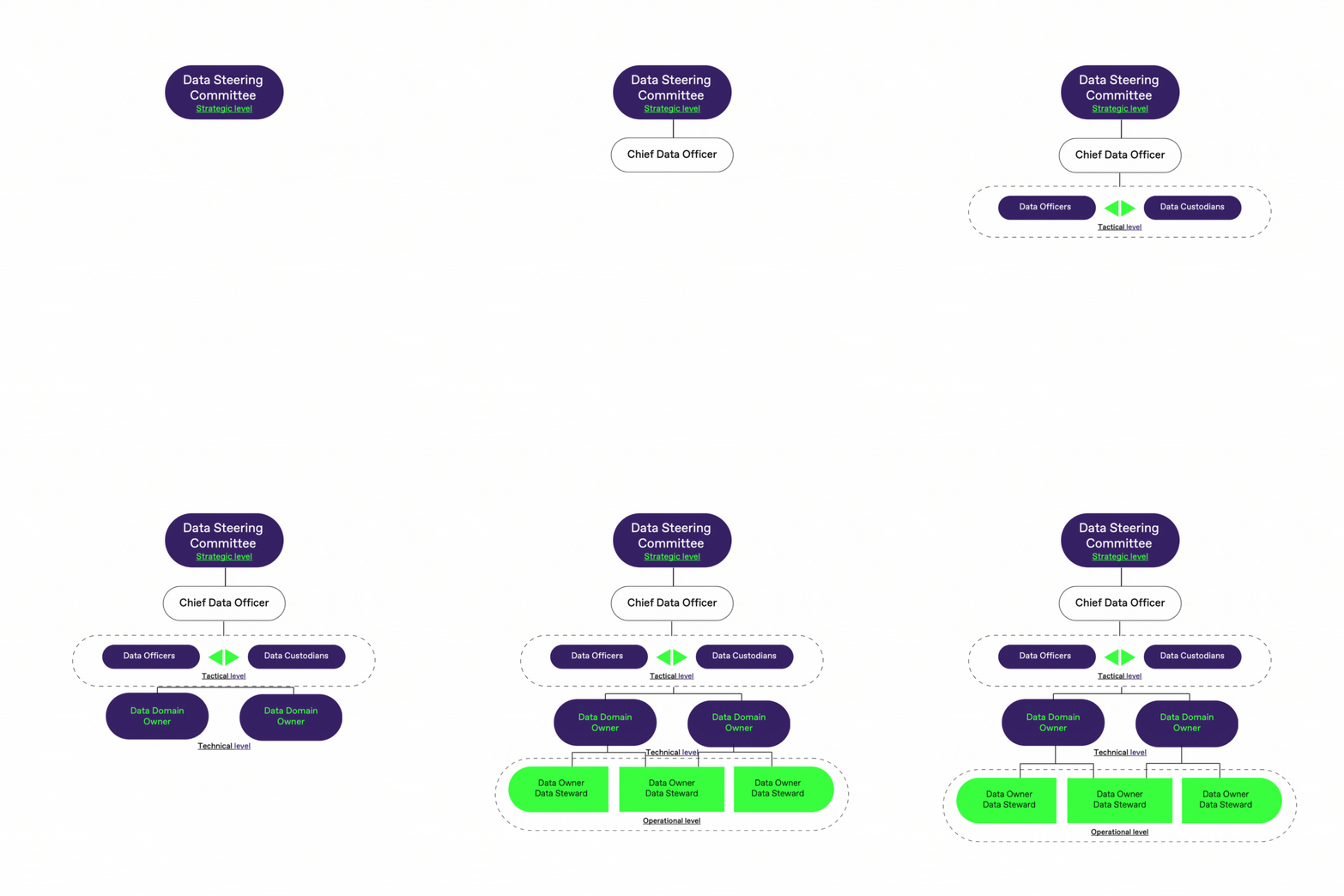
At the organizational level, the data governance framework defines the roles, responsibilities, communication channels, and decision rights (see Fig. 1). Within this level, data governance roles and associated responsibilities are pivotal. Typically, up to six distinct roles exist, and they are hierarchically structured on four distinct levels (see Fig. 2).
At the organizational level, the data governance framework defines the roles, responsibilities, communication channels, and decision rights (see Fig. 1). Within this level, data governance roles and associated responsibilities are pivotal. Typically, up to six distinct roles exist, and they are hierarchically structured on four distinct levels (see Fig. 2).
.gif?width=864&height=864&name=Data%20white%20paper%20animations%20(2).gif "Data white paper animations (2)")
Auf der organisatorischen Ebene werden Rollen, Verantwortlichkeiten, Kommunikationskanäle und Entscheidungsrechte gemäß des Data-Governance-Frameworks festgelegt (siehe Abb. 1). Innerhalb dieser Ebene sind die Data-Governance-Rollen und die damit verbundenen Verantwortlichkeiten von zentraler Bedeutung. In der Regel gibt es sechs verschiedene Rollen, die hierarchisch auf vier unterschiedlichen Ebenen strukturiert sind.
Auf der obersten strategischen Ebene agiert das Data Steering Committee, bestehend aus Personen aus der Geschäftsführung, erfahrenen IT-Fachleuten und Entscheidungsträger*innen, und legt die übergreifenden Ziele und Richtlinien der Data Governance fest.
Während das Steering-Committee eine beratende Rolle einnimmt, hat der Chief Data Officer (CDO), der dem Ausschuss unterstellt ist, eine praktische Führungsrolle auf der taktischen Ebene. Der CDO leitet die Data-Governance-Initiativen, entwickelt Datenstrategien und sorgt dafür, Data-Governance-Richtlinien einzuhalten. Der CDO fungiert als Brücke zwischen dem Ausschuss, den Data Officers (Datenverantwortlichen) und der Datenverwaltung. Die Rolle des CDO ist optional und existiert vor allem in größeren Organisationen.
Im Gegensatz zum CDO konzentrieren sich Data Officers auf die Datenqualität, Compliance und die Einhaltung von Governance-Richtlinien. Data Officers sind verantwortlich für die Umsetzung der Ziele, Grundsätze und Richtlinien des Data Steering Committees.
Sie arbeiten oft parallel zu den Data Officers und sind für die IT-Infrastruktur und die Umsetzung der vereinbarten Data-Governance-Richtlinien unter anderem in Bezug auf die Datenspeicherung, das Datenmanagement, die Zugriffskontrolle und die Sicherheit verantwortlich.
Auf der technischen Ebene überwachen Data Domain Owners spezifische Bereiche von Datensätzen, Prozessen und Analysen innerhalb ihres Datenfachbereichs und repräsentieren somit eine höhere Autorität auf der unmittelbaren operativen Ebene. Sie haben die Befugnis, Entscheidungen über den Datenzugriff, die Datennutzung und die Datenaufbewahrung innerhalb ihres Bereichs zu treffen.
Sie sind für die erforderlichen Datenobjekte eines Produkts verantwortlich. Sie verwalten den Zugriff, treffen Entscheidungen und sichern die Datenobjekte.
Diese Rolle erfordert fortgeschrittene technische Expertise und erfüllt die notwendigen Transformationen in Bezug auf Datenaufbereitung, Qualität und Einhaltung von Vorschriften. Data Stewards haben keine Entscheidungsbefugnis über die Datensätze, sie sind jedoch verantwortlich für die Klassifizierung der Datensätze basierend auf deren Sensibilität, Wert und Zweck und liefern somit Input für das Lebenszyklusmanagement der Daten.
At the highest, strategical level, a Data Steering Committee – consisting of experienced technical experts, IT experts, and decision-makers – initially defines the overarching objectives and data governance policies.
While the steering committee takes on an advisory role, the Chief Data Officer (CDO), who reports to the committee, has a more hands-on executive role, operating at the tactical level. The CDO leads the data governance initiatives, develops data strategies, and ensures the implementation of data governance policies. The CDO acts as a bridge between the committee, Data Officers, and Custodians. The role of a CDO is optional and might only exist in larger organizations.
In contrast to the CDO, Data Officers focus on data quality, compliance, and governance policy implementation. Data Officers are responsible for implementing and complying with the objectives, principles, and policies of the Data Steering Committee.
They often work in parallel with Data Officers and are responsible for the IT infrastructure and implementing the agreed data governance policies related to data storage and management, access control, security, etc.
At the technical level, Data Domain Owners oversee specific areas of data records, processes, and analyses within their data domain and thus represent a higher level of authority at the immediate operational level. They have the authority to make decisions about data access, usage, and retention within their domain.
At the operational level, this role is responsible for the product’s required data objects. They manage access, make decisions, and secure the data objects.
At the operational level, this role requires advanced technical expertise and fulfills the necessary transformations regarding data preparation, quality, and compliance with regulations. Data Stewards do not have decision-making power over the data sets; however, they are responsible for classifying the data sets based on their sensitivity, value, and purpose, thus providing input regarding data lifecycle management.
At the organizational level, the data governance framework defines the roles, responsibilities, communication channels, and decision rights (see Fig. 1). Within this level, data governance roles and associated responsibilities are pivotal. Typically, up to six distinct roles exist, and they are hierarchically structured on four distinct levels (see Fig. 2).
At the highest, strategical level, a Data Steering Committee – consisting of experienced technical experts, IT experts, and decision-makers – initially defines the overarching objectives and data governance policies.
While the steering committee takes on an advisory role, the Chief Data Officer (CDO), who reports to the committee, has a more hands-on executive role, operating at the tactical level. The CDO leads the data governance initiatives, develops data strategies, and ensures the implementation of data governance policies. The CDO acts as a bridge between the committee, Data Officers, and Custodians. The role of a CDO is optional and might only exist in larger organizations.
In contrast to the CDO, Data Officers focus on data quality, compliance, and governance policy implementation. Data Officers are responsible for implementing and complying with the objectives, principles, and policies of the Data Steering Committee.
They often work in parallel with Data officers and are responsible for the IT infrastructure and implementing the agreed data governance policies related to data storage and management, access control, security, etc.
At the technical level, Data Domain Owners oversee specific areas of data records, processes, and analyses within their data domain and thus represent a higher level of authority at the immediate operational level. They have the authority to make decisions about data access, usage, and retention within their domain.
This role is responsible for the product’s required data objects. They manage access, make decisions, and secure the data objects.
At the operational level, these roles typically collaborate within a department, team, or on a specific topic.
This role requires advanced technical expertise and fulfills the necessary transformations regarding data preparation, quality, and compliance with regulations. Data Stewards do not have decision-making power over the data sets; however, they are responsible for classifying the data sets based on their sensitivity, value, and purpose, thus providing input regarding data lifecycle management.
At the operational level, these roles typically collaborate within a department, team, or on a specific topic.
At the highest, strategical level, a Data Steering Committee – consisting of experienced technical experts, IT experts, and decision-makers – initially defines the overarching objectives and data governance policies.
While the steering committee takes on an advisory role, the Chief Data Officer (CDO), who reports to the committee, has a more hands-on executive role, operating at the tactical level. The CDO leads the data governance initiatives, develops data strategies, and ensures the implementation of data governance policies. The CDO acts as a bridge between the committee, Data Officers, and Custodians. The role of a CDO is optional and might only exist in larger organizations.
In contrast to the CDO, Data Officers focus on data quality, compliance, and governance policy implementation. Data Officers are responsible for implementing and complying with the objectives, principles, and policies of the Data Steering Committee.
They often work in parallel with Data officers and are responsible for the IT infrastructure and implementing the agreed data governance policies related to data storage and management, access control, security, etc.
At the highest, strategical level, a Data Steering Committee – consisting of experienced technical experts, IT experts, and decision-makers – initially defines the overarching objectives and data governance policies.
While the steering committee takes on an advisory role, the Chief Data Officer (CDO), who reports to the committee, has a more hands-on executive role, operating at the tactical level. The CDO leads the data governance initiatives, develops data strategies, and ensures the implementation of data governance policies. The CDO acts as a bridge between the committee, Data Officers, and Custodians. The role of a CDO is optional and might only exist in larger organizations.
In contrast to the CDO, Data Officers focus on data quality, compliance, and governance policy implementation. Data Officers are responsible for implementing and complying with the objectives, principles, and policies of the Data Steering Committee.
They often work in parallel with Data officers and are responsible for the IT infrastructure and implementing the agreed data governance policies related to data storage and management, access control, security, etc.
At the technical level, Data Domain Owners oversee specific areas of data records, processes, and analyses within their data domain and thus represent a higher level of authority at the immediate operational level. They have the authority to make decisions about data access, usage, and retention within their domain.
This role is responsible for the product’s required data objects. They manage access, make decisions, and secure the data objects.
At the operational level, these roles typically collaborate within a department, team, or on a specific topic.
This role requires advanced technical expertise and fulfills the necessary transformations regarding data preparation, quality, and compliance with regulations. Data Stewards do not have decision-making power over the data sets; however, they are responsible for classifying the data sets based on their sensitivity, value, and purpose, thus providing input regarding data lifecycle management.
At the operational level, these roles typically collaborate within a department, team, or on a specific topic.
Expertentipp:
Um die Effektivität der organisatorischen Struktur sicherzustellen, ist die Implementierung von Standards und Richtlinien entscheidend. Dies umfasst die Bewertung aktueller und geplanter Datenprozesse über alle Phasen des Datenlebenszyklus hinweg, um Lücken zu identifizieren, die Einhaltung von Vorschriften zu gewährleisten und die allgemeine Datenqualität und Effizienz zu verbessern. Diese Analyse sollte auf definierten Kriterien beruhen – mit klaren Entscheidungs- und Vetorechten. Zu den wichtigsten Kriterien gehören die Datenqualität, die Extraktion und Dokumentation relevanter Metadaten, die Dokumentation des Datenflusses von der Erstellung bis zur Löschung und die Implementierung robuster Datensicherheitsmaßnahmen. Diese Maßnahmen können den Wert der Datenbestände der Organisation maximieren und gleichzeitig die Risiken verringern sowie die Nachhaltigkeit sicherstellen.
.gif?width=864&height=864&name=Data%20white%20paper%20animations%20(1).gif "Data white paper animations (1)")
Die Implementierung eines Data-Governance-Frameworks lässt sich in fünf Schritten zusammenfassen. Es ist wichtig zu beachten, dass die Einführung eines Data-Governance-Frameworks ein fortlaufender Prozess ist, der eine kontinuierliche Erweiterung, regelmäßige Überprüfung und häufige Aktualisierung der Datenrichtlinien, -verfahren und -standards erfordert.
Expert tip:
A well-maintained data catalog is crucial as it acts as a central repository for data assets, ensuring accuracy, consistency, and accessibility across the organization. Constant expansion, regular review, and updates are essential to maintaining the data catalog as a single source of truth.

The implementation of a data governance framework can be summarized in five major steps (see Fig. 3). Note that introducing a data governance framework is an ongoing process requiring continuous expansion, regular review, and frequent updates of data policies, procedures, and standards.
Expertentipp:
Ein gut gepflegter Datenkatalog ist von entscheidender Bedeutung, da er als zentrales Repository für Datenbestände fungiert und die Genauigkeit, Konsistenz und Zugänglichkeit im gesamten Unternehmen gewährleistet. Ständige Erweiterung, regelmäßige Überprüfung und Aktualisierung sind unerlässlich, um den Datenkatalog als eine einzige Single Source of Truth zu erhalten.
Der Aufbau einer Data Governance ist ein fortlaufender Prozess, der sich konstant weiterentwickelt und die Benutzerfreundlichkeit und Zugänglichkeit in den Vordergrund stellt. Dabei gilt es, einzelne Aspekte detailliert zu definieren, ohne übermäßige Komplexität zu erzeugen. Dieses Gleichgewicht ermöglicht es, sich auf das Wesentliche zu konzentrieren und den Wert der Daten von Anfang an sicherzustellen. Der Aufbau über einem definierten Anwendungsfall hilft, das Framework dynamisch zu gestalten und anzupassen, anstatt zuerst ein theoretisches Rahmenwerk zu erstellen und es dann mit Daten zu füllen. Darüber hinaus sollte die Implementierung messbar sein, indem KPIs definiert werden, etwa die Data-Accuracy-Rate oder das Engagement der Data Stewards.
Eine gut durchdachte Data Governance bildet die Grundlage für eine nachhaltige und effiziente Datennutzung sowie für den sicheren Einsatz von KI-Technologien. Sie erfordert eine Datenstrategie und ein definiertes Rollen- und Rechtekonzept, das zur Organisation passt, um das Datenpotenzial im Einklang mit den strategischen Zielen erfolgreich zu nutzen.
Wenn Sie das volle Potenzial Ihrer Daten mit einem strategischen Governance-Ansatz ausschöpfen möchten, wenden Sie sich an unsere Data Governance Experten.

Expert tip:
Start small by focusing on one use case at a time instead of creating an overarching framework. Identify relevant data domains, define roles and rights, and document everything in the data catalog. Gradually expand by incorporating more use cases, data domains, and roles.
Building data governance is an ongoing process that evolves, prioritizing usability and accessibility. It involves defining individual aspects in sufficient detail while avoiding excessive complexity. This balance allows for focus on essentials and ensures their value from the beginning. Starting with a defined use case helps to build and adapt the framework dynamically instead of constructing a conceptual framework first and then filling it with data. Moreover, the implementation should be measurable by defining KPIs, e.g., data accuracy rate or engagement of Data Stewards.
Well-thought-out data governance is the basis for sustainably efficient data usage and the secure use of AI technologies. It requires a data strategy and a defined roles and rights concept that fits the organization to harness data potential in line with its strategic goals successfully. If you want to unlock the full potential of your data with a strategic governance approach, consult our Data Governance experts.

Expertentipp:
Fangen Sie klein an, indem Sie sich jeweils auf einen Anwendungsfall konzentrieren, anstatt ein übergreifendes Framework zu schaffen. Identifizieren Sie relevante Datendomänen, definieren Sie Rollen und Rechte und dokumentieren Sie alles im Datenkatalog. Erweitern Sie diesen nach und nach um weitere Anwendungsfälle, Datendomänen und Rollen.
KI verändert schon jetzt alles, und das Tempo der Veränderungen nimmt rasant zu. Sie führt zu einer Zukunft, in der Daten genutzt werden, um die Produktivität der Mitarbeitenden massiv zu steigern und einfache und sich wiederholende Arbeiten zu reduzieren. Wir können Ihnen helfen, das volle Potenzial Ihrer Daten auszuschöpfen.
Nortal’s Cyber Incident Preparedness Services directly address these DORA incident response requirements:
ICT business continuity policy and disaster recovery plans; Procedures for management of internal- and external crisis communications; Scenarios of cyberattacks.
ICT security awareness programs and resilience trainings; Post ICT-related incident review procedures; Digital resilience strategy effectiveness monitoring.
Incident response communication policies for staff and external stakeholders; Communication plans for incident disclosure.
Roles and responsibilities for different incident types and scenarios; Notification to clients and internal escalation procedures.
Nutzen Sie das volle Potenzial Ihrer Daten. Sprechen Sie noch heute mit unseren Data-Governance-Expert*innen.
Artikel

In diesem Artikel führen wir Sie Schritt für Schritt durch die Entwicklung einer KI-Strategie.
Erfolgsgeschichte

Der Nord-Ostsee-Kanal ist eine der meistbefahrenen künstlichen Seeschifffahrtsstraßen der Welt und verbindet die Nordsee mit der Ostsee.
Artikel

Navigieren Sie durch die unbekannten Gewässer, wie GenAI die Risiken schlechter Datenqualität mindert und ein Ökosystem zuverlässiger, angereicherter Daten kreieren kann.