Bild (1)
Bild (1)
Bild (1)
Bild (1)
Bild (1)

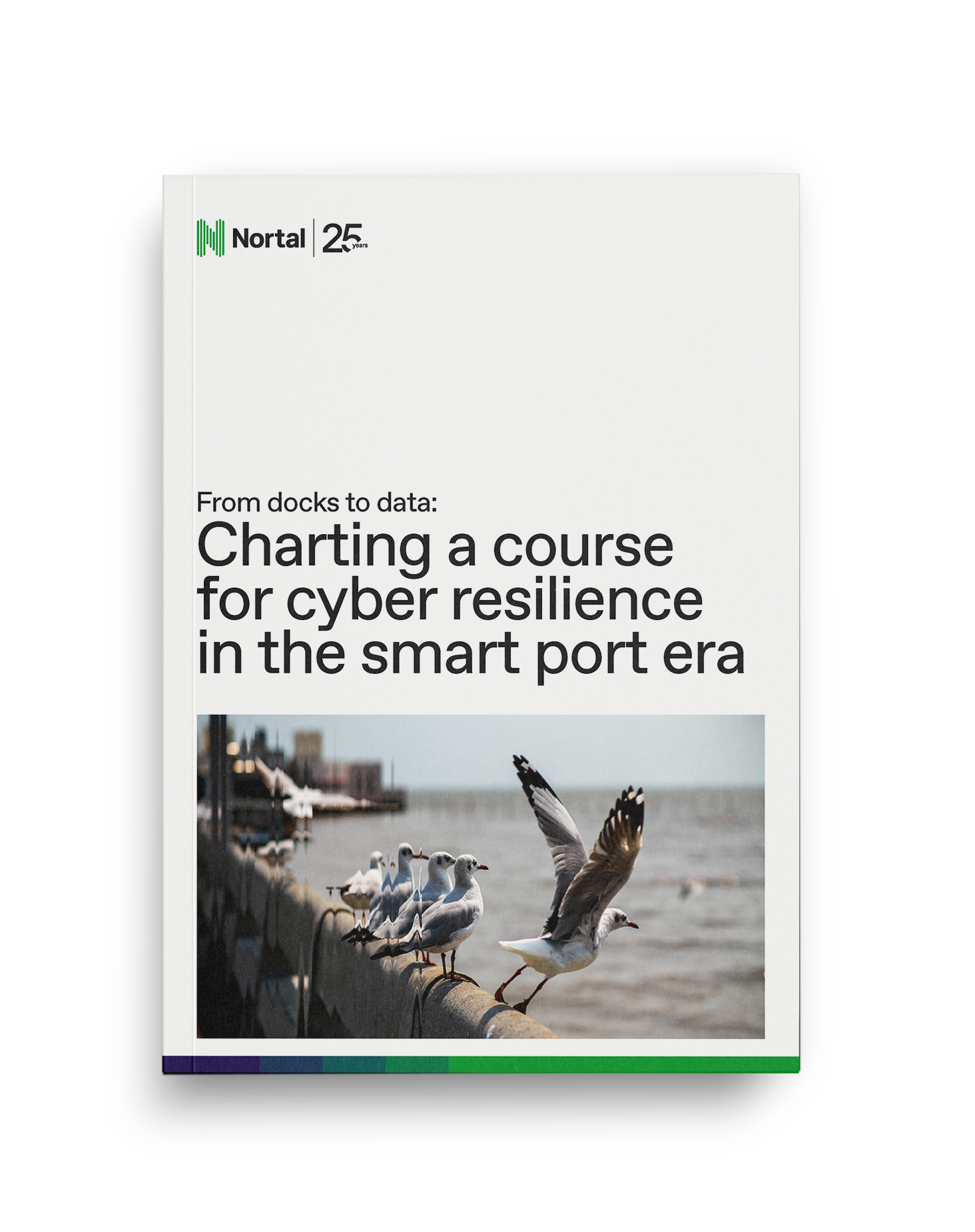
From docks to data: Charting a course for cyber resilience in the smart port era 

New insights on securing hyper-connected ports against operational shutdowns, supply chain disruption, and escalating cyber threats.
Service

Cyber Resilience

Industry

Logistics

The convergence of IT, OT, and emerging AI has unlocked unprecedented efficiency across port operations. At the same time, it has erased traditional security boundaries — introducing new forms of risk that extend far beyond data loss.


Can smart ports deliver efficiency without exposing operations and global supply chains to systemic cyber risk?

Cyber risk is no longer just digital

Cyber threats are no longer confined to data theft; they now pose a direct risk of operational paralysis, physical sabotage, and systemic supply chain disruption that can ripple across the globe.

A single, well-executed cyber incident can bring a major port to a standstill — incurring millions in losses per day and triggering cascading failures across international supply chains.


€200k

per hour is the estimated downtime cost for one large port in UK.

€95B

could be the expected economic loss by a coordinated cyber-attach on just 15 major ports in the Asia-Pacific region

90%

of port and terminal executives felt "Very confident" in their overall cybersecurity posture while a staggering...

45%

of them admitted their organisation suffered a security breach that year before.

Despite clear and escalating risks, a dangerous perception gap persists within maritime leadership, creating one of the most significant strategic blind spots.

Moving waves in slomo

When the perimeter disappears

The traditional approach to cybersecurity, built around strong perimeters and assumed trust, is no longer sufficient in a hyper-connected port ecosystem. True resilience requires a shift from reactive, compliance-driven security toward strategies designed for an assumed-breach reality.

Efficiency and democracy are not competing goals 

Efficiency and democracy reinforce one another.

The white paper argues that operational performance, state capacity and public trust, core measures of efficiency, depend on the same values that sustain democracy: transparency, accountability and pluralism.

Centralized systems may deliver quick wins but often weaken resilience and trust. Federated, modular designs take longer yet build adaptability, sustainability and sovereignty. 

A framework for maritime cyber resilience

This white paper moves beyond a simple enumeration of threats to present an integrated, three-pillar framework for achieving maritime cyber resilience — combining resilient architecture, defensible supply chains, and a culture of active defence.

It provides an actionable roadmap to help port leadership:

  • Understand the modern cyber-physical threat landscape

  • Reduce exposure across converged IT, OT, and third-party environments

  • Build resilience that supports continuity, compliance, and trust

white_paper_mock_Maritime_Cyber_WP

Resilience as the new North Star

Cybersecurity is no longer a back-office IT function or a cost centre. It is a core component of operational infrastructure and business continuity — and a defining factor in the reliability of global trade. 

Explore the risks, the framework, and the roadmap for cyber resilience in the smart port era.

Don’t wait for an attack to test your defences!

Contact us to detect, prevent, respond to, and recover from cyber incidents.

Nick2

Nick Washer

Global Head of Defence

James2

James Thomas

Global Head of Cyber

Kadri2 (1)

Kadri Haufe

Chief Business Officer Cybersecurity